Our Story
From Kailash to Inner Shambhala
Kailash to Shambhala begins with a mountain.
Mount Kailash has long stood in the imagination as a sacred outer mountain — remote, ancient, severe, and almost impossible to possess. It is not a place one casually passes through. It asks for distance, humility, and attention.
Shambhala, for us, is not a hidden kingdom to be found somewhere else.
It is an inner state.
A state of clarity.
A state of steadiness.
A state of symbolic order.
A quiet center one returns to, again and again, in the middle of modern life.
Kailash to Shambhala was created around this movement: from the outer mountain to the inner sanctuary, from noise to attention, from scattered living to quiet presence.
We gather Himalayan-inspired adornments, symbolic objects, and ritual pieces for people who want their daily spaces and personal objects to carry meaning — not loudly, not theatrically, but with weight, restraint, and material depth.
These are not ordinary accessories.
They are objects of return.
Objects That Bring the Mind Back
In modern life, the sacred rarely announces itself.
It appears in small gestures.
A pendant touched before leaving the house.
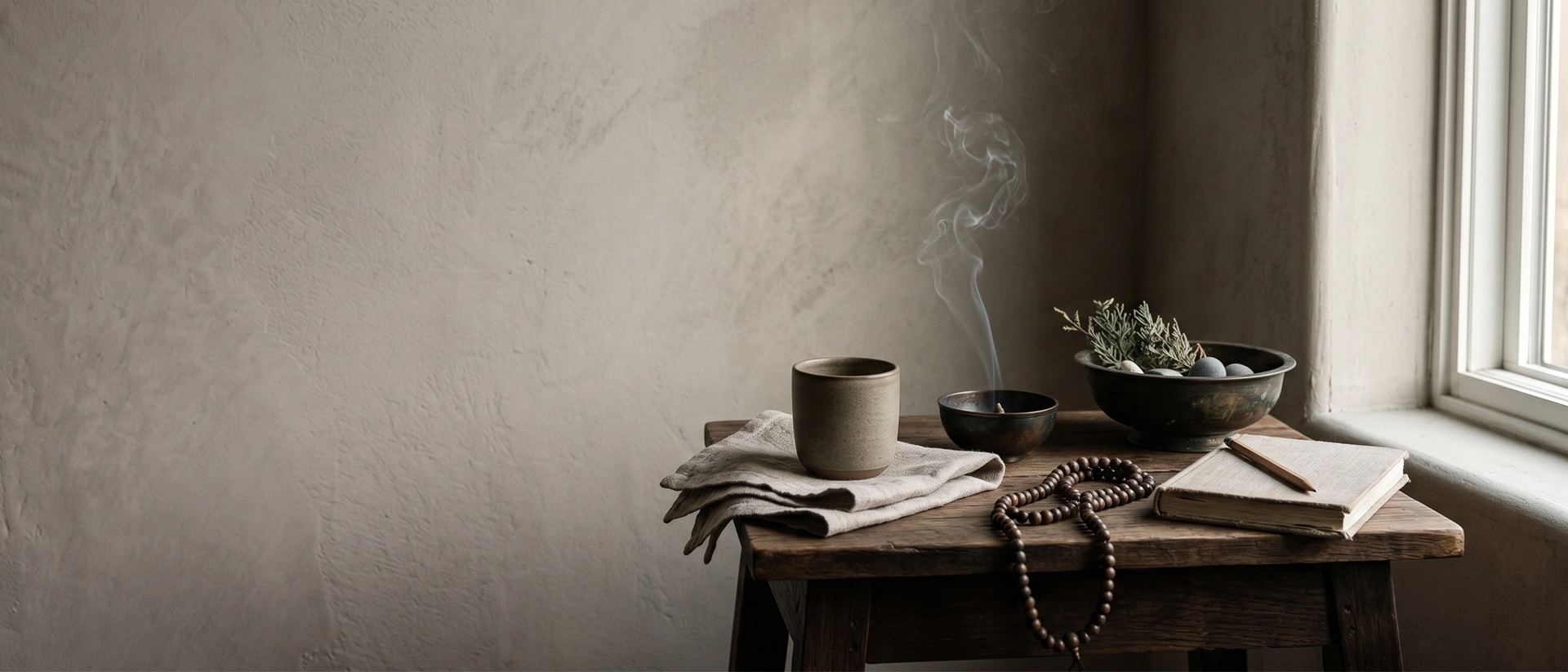
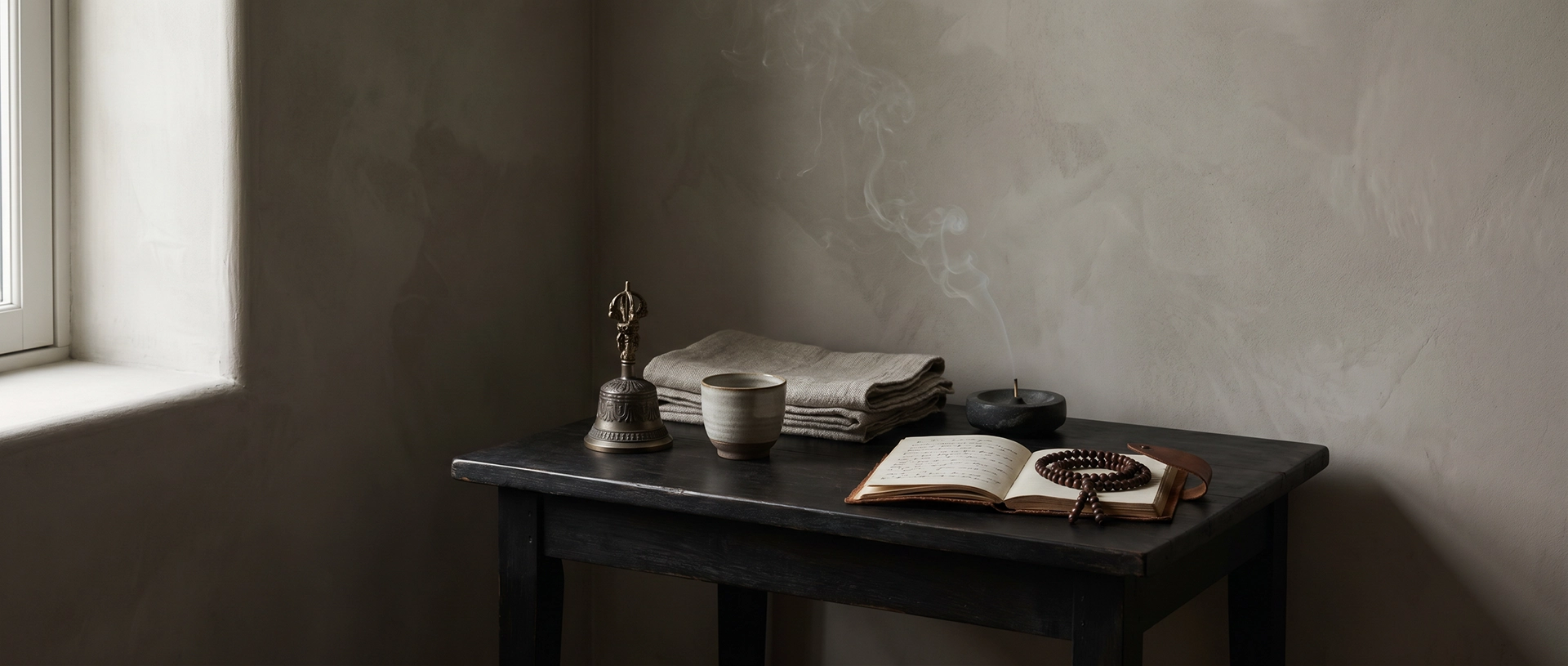
A mala resting beside an open notebook.
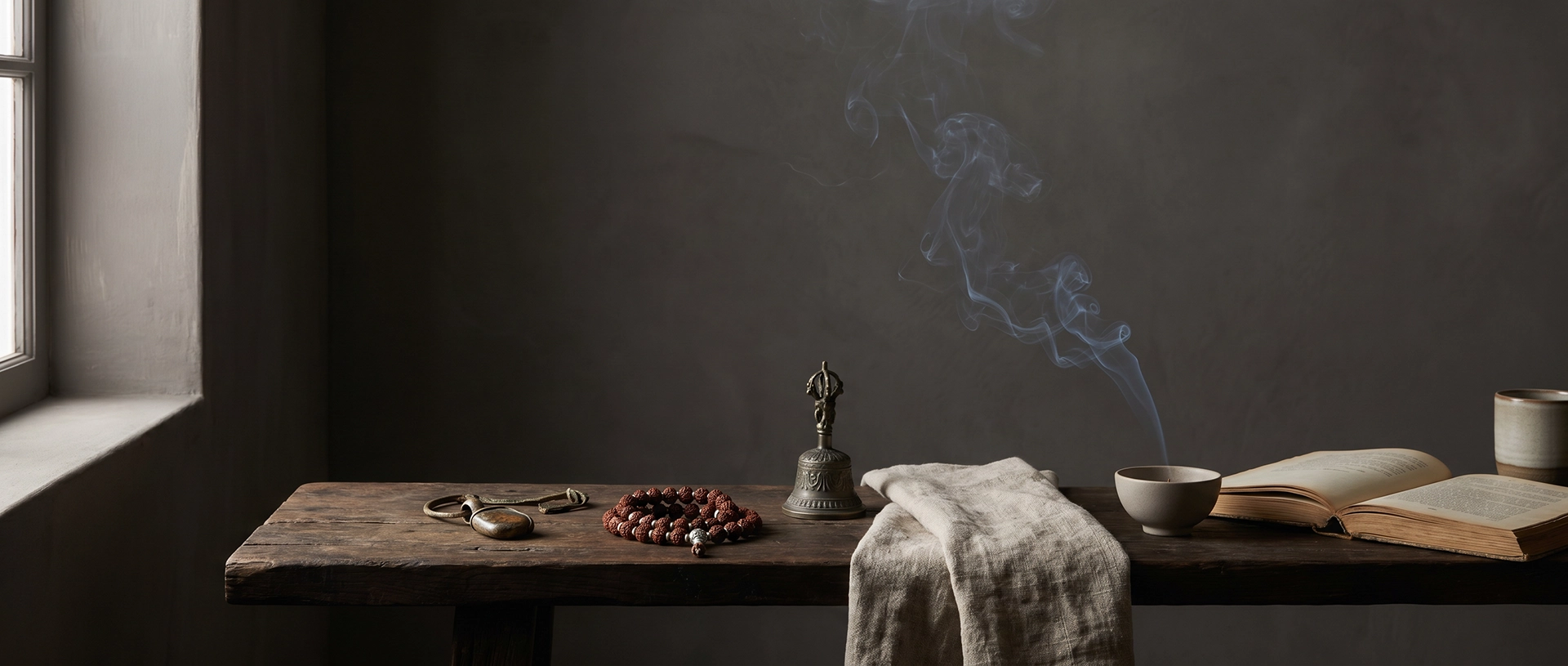
A Vajra object placed on a quiet desk.
A small charm near a doorway.
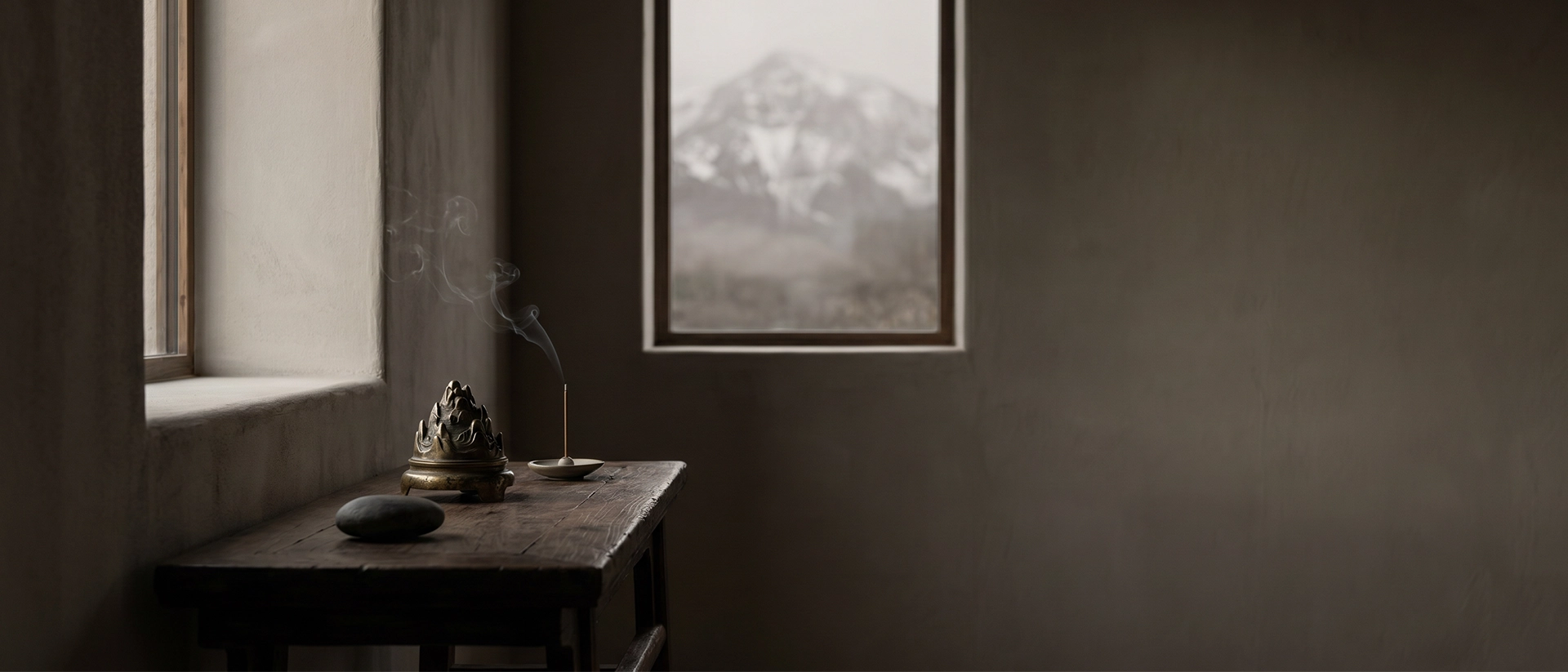
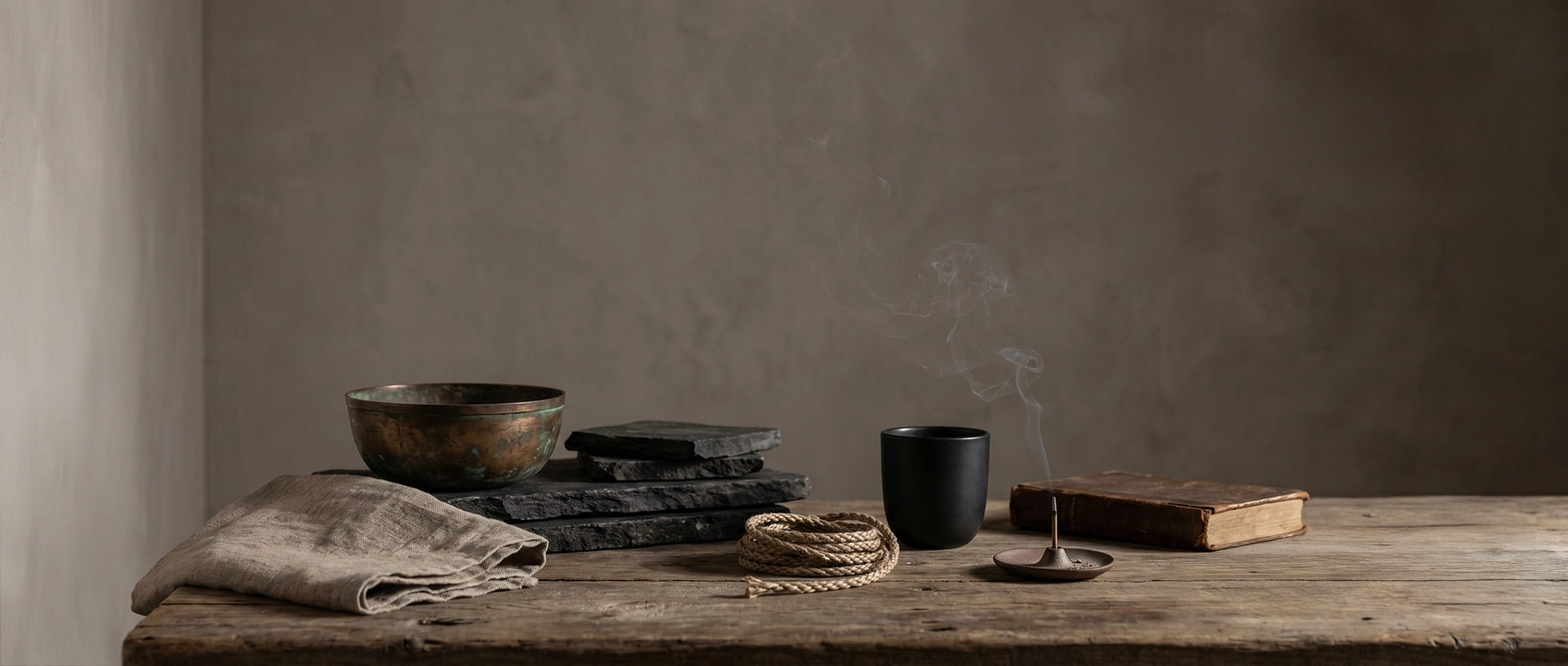
A bowl, a cord, a bead, a stone, a trace of smoke at the edge of a room.
We believe objects can help mark a return.
Not because they promise to change fate.
Not because they grant protection, wealth, healing, or success.
Not because they hold supernatural power.
But because the right object, kept close enough and seen often enough, can become a reminder.
A reminder of intention.
A reminder of boundary.
A reminder of attention.
A reminder of the stillness one means to return to.
This is the heart of Kailash to Shambhala: symbolic objects for modern ritual living.
Objects for the wrist, the neck, the desk, the doorway, the altar corner, the car, the shelf, the nightstand, and the quiet room.
Objects that do not ask to be worshipped.
Objects that ask to be noticed.
A Modern Ritual Life
Ritual does not have to be distant from daily life.
It does not have to belong only to temples, pilgrimages, or formal practice.
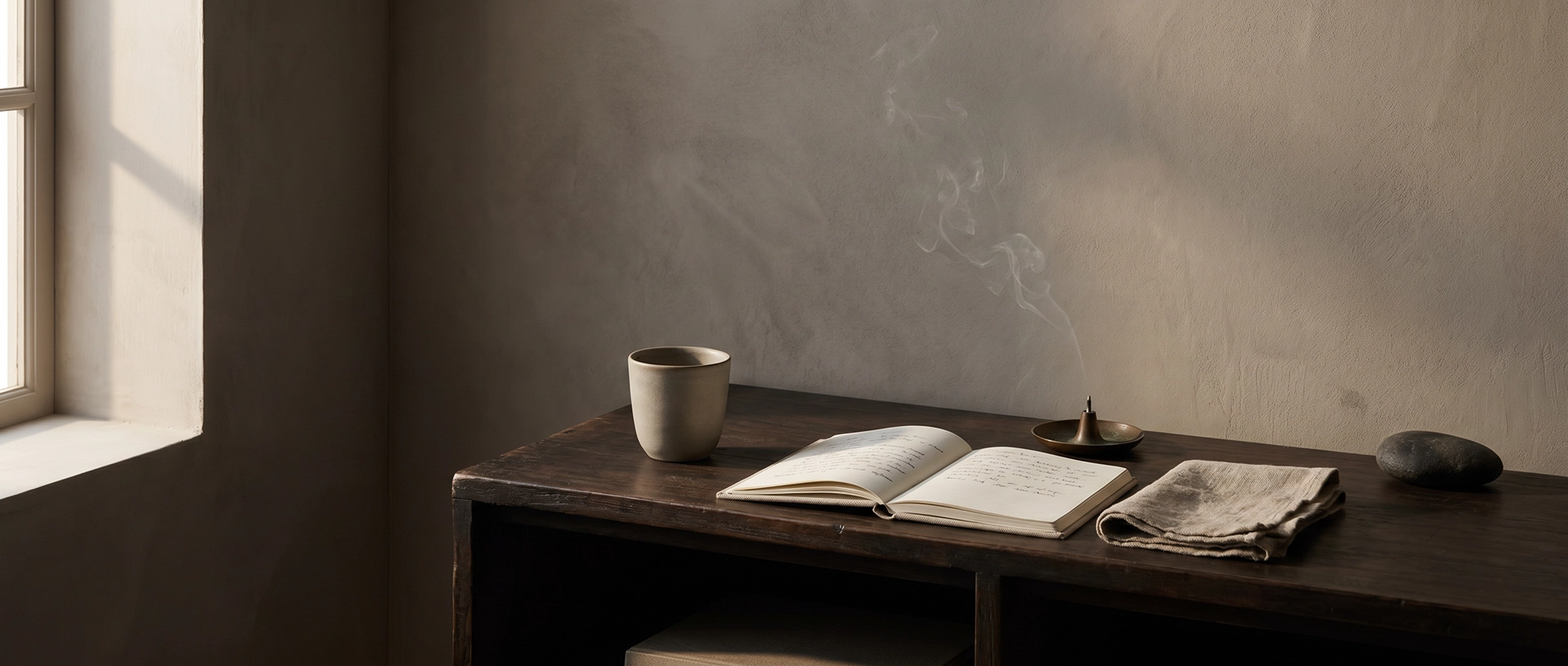
It may begin at a desk before work.
At a threshold before entering the world.
At a bedside before sleep.
In the car before a long drive.
On a shelf where a small object catches the afternoon light.
In the pause between one breath and the next.
For us, ritual is not performance.
It is the act of returning.
Returning to the body.
Returning to the room.
Returning to the present moment.
Returning to the inner order that can be forgotten in speed.
Kailash to Shambhala exists for this kind of life: a life where spiritual meaning is not separated from the home, the hand, the table, the doorway, or the ordinary day.
Symbols with Quiet Weight
Many of the forms we work with draw from Himalayan-inspired and Buddhist-inspired symbolic language.
The Vajra may speak to clarity, focus, and inner order.
Dzi beads may speak to carried protection, continuity, and watchful presence.
The Endless Knot may suggest interconnection, continuity, and devotion.
The Lotus may speak to quiet emergence and composure.
Garuda may carry the feeling of guardian presence and rising above obstruction.
Phurba-inspired forms may speak to boundary, resolve, and the cutting through of confusion.
We use these symbols with restraint.
We do not treat them as decoration without meaning.
We do not turn them into exaggerated promises.
We do not claim powers, blessings, lineages, or origins that are not verified.
Instead, we translate them into a modern language of attention, grounding, boundary, clarity, devotion, and return.
The symbol matters.
But the way it is lived with matters just as much.
Material Presence
Meaning begins before explanation.
It begins in weight.
In surface.
In patina.
In the darkened edge of metal.
In the worn contour of a bead.
In the grain of wood.
In the quiet tension of cord.
In the roughness of linen.
In the smoke rising from a ceramic vessel.
Kailash to Shambhala is built around material presence.
Aged metals, oxidized silver, old copper tones, raw stone, Dzi-inspired surfaces, wood and seed beads, braided cord, matte ceramic, linen, smoke, shadow — these are not background details. They are part of the language of the brand.
A surface can hold time.
A bead can hold rhythm.
A cord can hold closeness.
A vessel can hold breath.
A metal object can hold boundary.
A stone can hold stillness.
We are drawn to materials that feel touched by time rather than polished out of memory.
Nothing should feel too new, too loud, too perfect, or too easy.
An object should feel as though it belongs to a quiet room, a private shelf, a mindful workspace, a personal altar, or the inside of a coat pocket — somewhere close enough to become part of a daily rhythm.
Symbolic, Not Supernatural
Kailash to Shambhala is spiritually suggestive, but claim-safe.
We do not sell certainty.
We do not promise that an object will protect you, heal you, bring wealth, remove misfortune, or change your destiny.
What we offer is quieter.
A symbolic boundary.
A tactile point of grounding.
A material reminder of intention.
A small companion for attention.
A meaningful object for a space of return.
The value of an object does not come from a promise.
It comes from the relationship one builds with it.
The way it is worn.
The way it is placed.
The way it is seen in passing.
The way the hand returns to it without thinking.
Over time, an object can become a witness to the life around it.
The Quiet Room Within
The world asks us to move quickly.
To answer, perform, accumulate, react, and continue.
But there are older rhythms beneath the speed.
The rhythm of breath.
The rhythm of touch.
The rhythm of returning to a room.
The rhythm of placing one object with care.
The rhythm of remembering what matters before the day carries us away.
Kailash to Shambhala is not a destination outside the self.
It is a path of return.
From the outer mountain to the inner state.
From sacred image to daily gesture.
From symbolic form to lived presence.
From Kailash to Inner Shambhala.
We create and curate objects for that return.
For quiet rooms.
For mindful workspaces.
For personal altars.
For thresholds.
For the wrist, the neck, the hand, and the home.
Objects of return for modern life.
Not to escape the world.
But to meet it with more stillness.