

Entryway & Threshold Objects, Arrival Rituals, and Symbolic Boundary
1. What is included in the Entryway & Threshold collection?
The Entryway & Threshold collection gathers KTS objects suited to doorways, hallway corners, entry consoles, passage walls, and transition spaces. It may include door blessings, wall hangings, corded charms, Dzi-inspired details, guardian motifs, small symbolic objects, and Tibetan-inspired or Himalayan-inspired pieces chosen for material presence, symbolic boundary, and quiet arrival atmosphere.
2. What makes an object suitable for an entryway?
An entryway object should feel visible, restrained, and meaningful without overwhelming the doorway or hall. In the KTS context, it may carry aged metal, dark cord, muted beads, carved form, patina, or symbolic presence. Its role is not to promise luck or protection, but to mark arrival, departure, boundary, and return with material presence.
3. What does threshold mean in the KTS context?
A threshold is a place of crossing: between outside and inside, movement and stillness, departure and return. In the KTS world, threshold objects are symbolic anchors for that transition. They may suggest boundary, steadiness, quiet guardianship, and attention, but they are not framed as supernatural shields or guaranteed protection devices.
4. How is KTS entryway decor different from ordinary decoration?
Ordinary entryway decor may simply fill a wall, console, or doorway. KTS entryway decor is chosen for symbolic meaning, material texture, and the way it shapes a quieter first impression of the home. The strongest pieces feel restrained, tactile, and integrated into the entry space rather than bright, crowded, theatrical, or purely decorative.
5. Can a doorway object be understood as a blessing?
A doorway object can be understood as a blessing when it is placed with sincere intention and symbolic care. In KTS language, blessing means a quiet gesture of welcome, boundary, steadiness, and return. It should not be treated as a literal guarantee of luck, cleansing, wealth, safety, or supernatural protection.
6. What makes entryway decor symbolic?
Entryway decor becomes symbolic when the object carries meaning through form, material, placement, and repeated daily encounter. A corded charm, aged metal motif, muted bead detail, or small guardian-inspired object may speak to boundary, grounding, and quiet presence. Its value comes from the relationship between object, doorway, home, and intention rather than guaranteed outcomes.
7. How can an entryway ritual stay simple?
An entryway ritual can stay simple by using one object and one moment of attention. You might notice a hanging charm as you leave, pause beside a console object when returning, or let a threshold piece mark the transition into the home. KTS ritual language stays practical: arrival, departure, boundary, grounding, and return.
8. Is a door blessing the same as a religious object?
A door blessing in the KTS context is a symbolic threshold object, not an authorized religious implement unless verified product data states otherwise. It may draw from Tibetan-inspired or Himalayan-inspired forms, but it should be approached with restraint and cultural respect. Its role is quiet presence and symbolic boundary, not religious performance or spiritual proof.
9. Can wall hangings be used near a threshold?
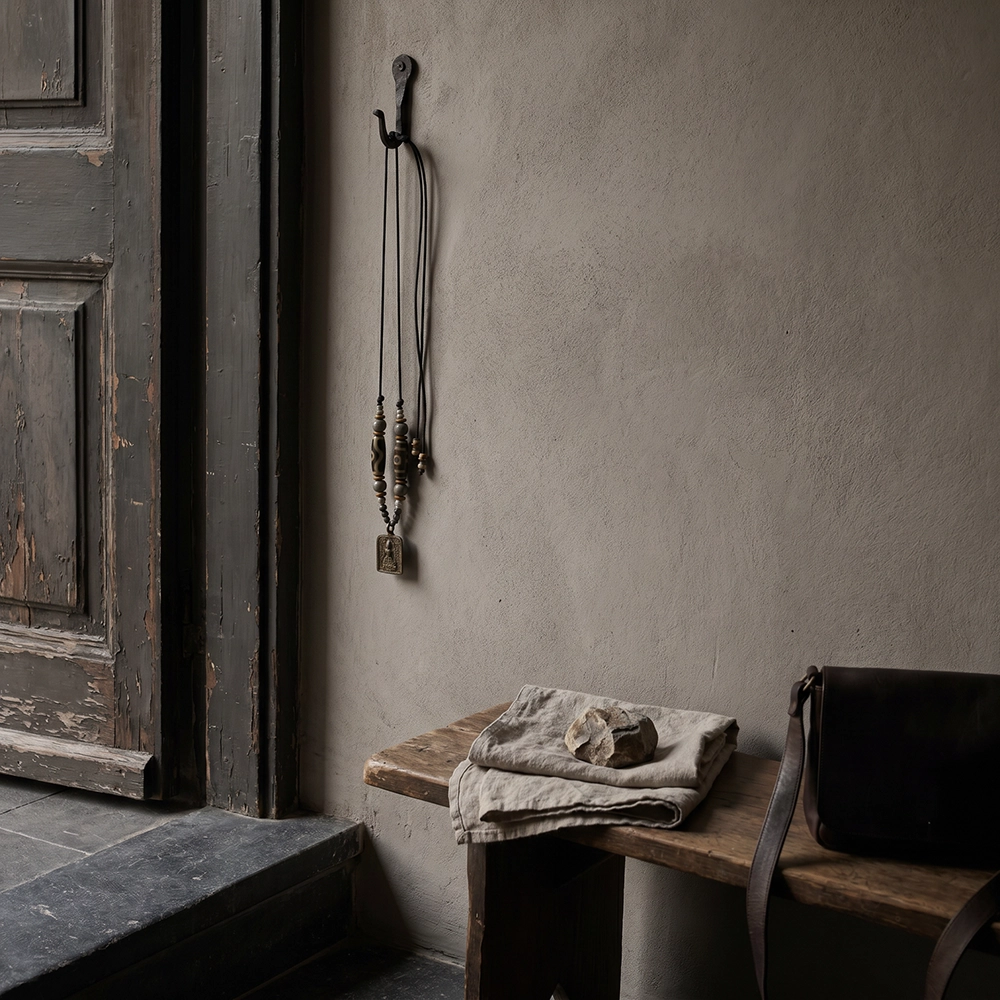
Yes. A wall hanging can work well near a threshold when it is placed close to a doorway, entry console, hallway edge, or passage wall with enough breathing room. In KTS language, the vertical placement can mark transition and boundary. The object should feel restrained and tactile rather than like boho macrame, festival decor, or market display.
10. Can an entryway charm carry protective meaning?
An entryway charm may carry protective meaning when its form, motif, or cultural inspiration points toward boundary, steadiness, or quiet guardianship. KTS uses protection language symbolically and respectfully, never as a promise of supernatural defense, luck, or guaranteed safety. The strongest interpretation is symbolic protection as boundary and grounded presence.
11. How should KTS objects be styled in an entryway?
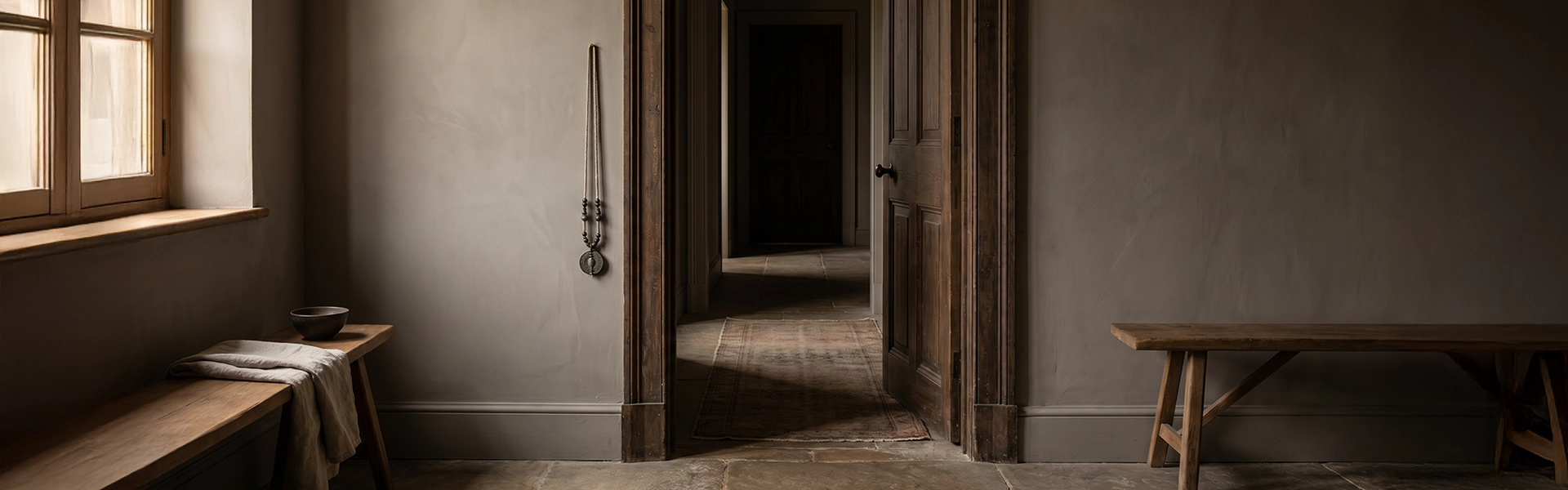
KTS entryway objects are strongest when styled with restraint. Use warm gray plaster, dark wood, raw stone, aged metal, dark cord, muted beads, linen, shadow, and one quiet living detail such as a bench, console, bag strap, ceramic cup, or worn threshold edge. Avoid crowded door displays, bright colors, overdecorated shrine styling, and market-like presentation.
12. How should I care for entryway and threshold objects?
Care depends on the specific material, so always follow the individual product page when available. In general, keep entryway objects dry, avoid harsh chemicals, wipe gently with a soft cloth, and handle aged metal, patina, cord, beads, ceramic, or carved surfaces with care. Check hanging cords or attachment points periodically if the object is suspended near a doorway.