

Wall Hanging Objects, Symbolic Wall Decor, and Quiet Threshold Presence
1. What is included in the Wall & Hanging Objects collection?
The Wall & Hanging Objects collection gathers KTS pieces designed for vertical placement, including Tibetan-inspired wall decor, hanging charms, symbolic ornaments, suspended metal forms, corded objects, guardian motifs, threshold objects, and wall-ready home adornments. The exact styles may vary by product, but the category is centered on symbolic presence, material texture, and quiet vertical space.
2. What makes wall decor symbolic rather than purely decorative?
Symbolic wall decor carries meaning through form, motif, material, placement, and the way it changes a room’s atmosphere. In the KTS context, a hanging object may suggest grounding, boundary, protection as symbolic presence, devotion, memory, or inner order. Its value is not in guaranteed outcomes, but in the relationship between object, wall, room, and intention.
3. Does Tibetan-inspired wall decor mean the object is made in Tibet?
No. Tibetan-inspired describes the symbolic and aesthetic direction of a wall or hanging object, not a verified origin claim. Unless a specific product page provides confirmed details, KTS does not claim that an object is made in Tibet, monk-blessed, temple-sourced, antique, consecrated, or ritually used. The language remains respectful, symbolic, and claim-safe.
4. How should Buddhist-inspired wall decor be approached respectfully?
Buddhist-inspired wall decor should be approached with restraint, clarity, and cultural respect. KTS frames these pieces as symbolic and aesthetic objects for modern ritual living, not as authorized religious implements unless verified product data states otherwise. The goal is quiet symbolic presence, not novelty decoration, religious performance, or exaggerated spiritual promise.
5. What is a hanging ritual object in the KTS context?
A hanging ritual object is a suspended or wall-placed piece that helps mark a vertical space with intention. It may belong near a meditation corner, doorway, desk, shelf, hallway, or personal altar-adjacent area. In the KTS context, it is not a magical device; it is a material reminder of boundary, stillness, attention, and return.
6. Can wall and hanging objects be used near thresholds?
Yes. Wall and hanging objects can work well near thresholds such as entryways, doorways, hallway corners, or transitions between rooms. In KTS language, threshold placement is symbolic: it can mark arrival, departure, boundary, and return. It should not be framed as guaranteed protection or supernatural defense.
7. Can a wall hanging carry protective meaning?
A wall hanging may carry protective meaning when its motif, material, or cultural inspiration points toward boundary, steadiness, or quiet guardianship. KTS uses protection language symbolically and respectfully, never as a promise of supernatural defense. A protection wall hanging is best understood as a visible reminder of boundary and grounded presence.
8. Where should wall and hanging objects be placed?
Wall and hanging objects work well on a quiet wall, beside a bookshelf, near a desk, above a small shelf, beside an entryway console, near a meditation corner, or at a threshold between rooms. Choose a location where the object has breathing room, a clear silhouette, and enough visual calm to feel intentional rather than crowded.
9. How should KTS wall and hanging objects be styled?
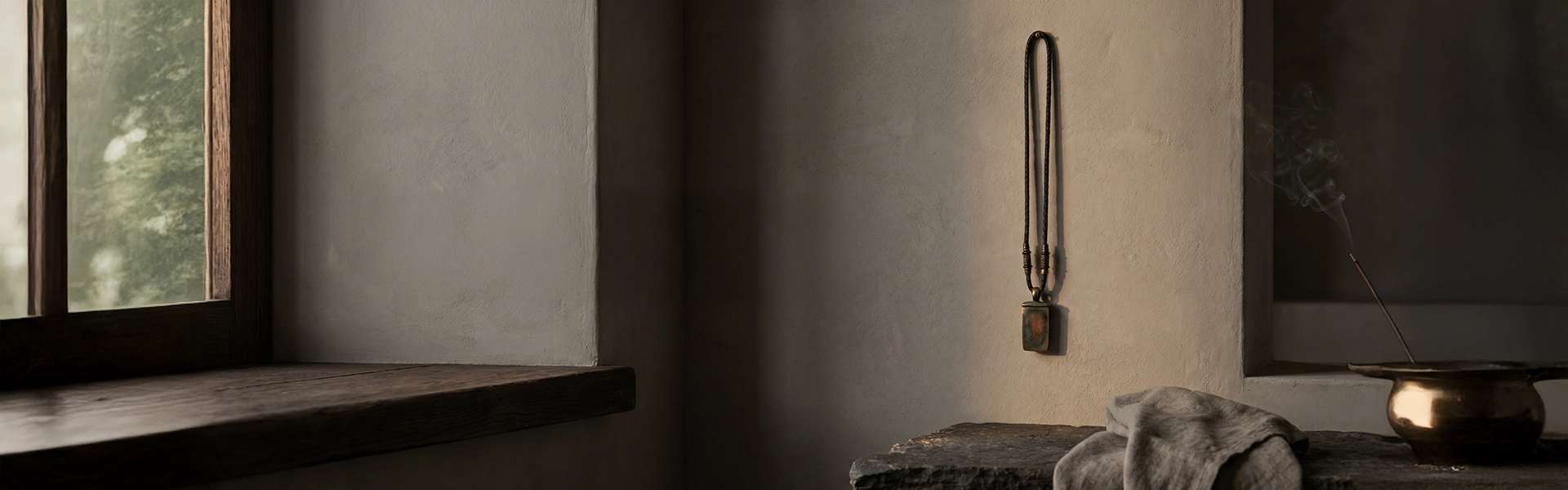
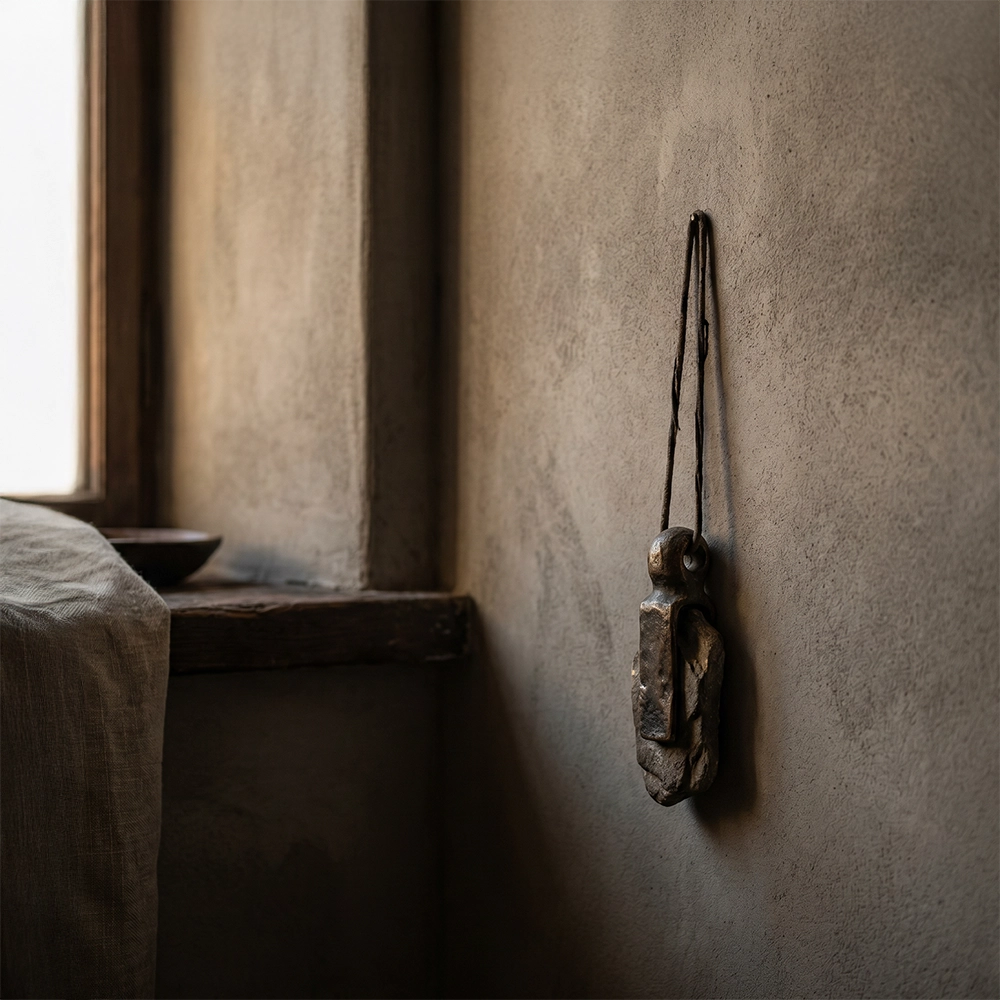
KTS wall and hanging objects are strongest when styled with restraint. Use warm gray plaster, dark wood, raw stone, aged metal, cord, linen, shadow, and one quiet ritual trace such as soft smoke or a worn shelf edge. Avoid crowded wall displays, bright colors, boho macrame styling, overdecorated shrine arrangements, or market-like presentation.
10. How are wall hanging objects different from altar objects?
Altar objects usually live on a surface such as a shelf, desk, stone tray, or personal altar, while wall hanging objects shape vertical space through suspension, placement, and silhouette. A hanging object may still feel ritual-adjacent, but it does not require an altar setting. Both can carry meaning, but they serve different spatial roles.
11. Is symbolic wall decor suitable as a meaningful gift?
Yes. Symbolic wall decor can be a meaningful gift for someone building a quiet home sanctuary, meditation corner, mindful workspace, entryway ritual, bookshelf arrangement, or personal altar-adjacent wall. The safest gift language is intention, steadiness, grounding, symbolic protection as boundary, devotion, and inner order rather than luck, healing, wealth, or life transformation.
12. How should I care for wall and hanging objects?
Care depends on the specific material, so always follow the individual product page when available. In general, keep wall and hanging objects dry, avoid harsh chemicals, wipe gently with a soft cloth, and handle aged metal, cord, patina, carved forms, or stone details with care. Natural wear and tactile texture should be treated as part of the object’s material presence.