

Incense Holders, Incense Burners, and Quiet Ritual Atmosphere
1. What is included in the Incense Holders collection?
The Incense Holders collection gathers KTS home pieces designed to hold incense, ash, and small ritual traces in personal altars, meditation corners, desks, shelves, and quiet interior spaces. It may include incense holders, incense burners, incense stick holders, cone incense vessels, ash bowls, sculptural trays, and Tibetan-inspired or Himalayan-inspired forms chosen for material presence and ritual atmosphere.
2. What makes an incense holder more than a simple functional object?
An incense holder can be functional, but in the KTS context it is also a material point of arrival. It holds ash, smoke, and pause in one place, helping a surface feel more intentional. Its value comes from form, weight, patina, placement, and atmosphere rather than any claim of spiritual cleansing, healing, or guaranteed transformation.
3. What is the difference between an incense holder and an incense burner?
An incense holder usually refers to an object that supports incense safely in place, while an incense burner may suggest a vessel, bowl, or form designed to hold burning incense, ash, or heat. In this collection, both terms point toward objects that shape a quiet incense ritual through material, placement, smoke, and surface rather than exaggerated spiritual claims.
4. What should I look for in an incense stick holder?
A good incense stick holder should give the incense a stable place to rest, leave room for ash, and feel visually grounded in the space where it lives. In the KTS world, an incense stick holder is strongest when it has material presence, enough breathing room, and a quiet relationship with dark wood, raw stone, aged metal, ceramic, or linen.
5. How is an altar incense holder different from ordinary home fragrance decor?
An altar incense holder is chosen for quiet placement, symbolic atmosphere, and material presence rather than scent alone. Ordinary fragrance decor may focus mainly on aroma or decoration, while an altar incense holder helps mark a personal altar, meditation shelf, or ritual corner as a space of stillness, transition, and return.
6. How should a Buddhist-inspired incense holder be approached respectfully?
A Buddhist-inspired incense holder should be approached with restraint and cultural respect. KTS frames these pieces as symbolic and aesthetic objects for modern ritual living, not as authorized religious implements unless verified product data states otherwise. Avoid treating sacred forms as novelty decor, exotic display, or proof of spiritual power.
7. Does Tibetan-inspired mean the incense holder is made in Tibet?
No. Tibetan-inspired describes the symbolic and aesthetic direction of an incense holder, not a verified origin claim. Unless a specific product page provides confirmed details, KTS does not claim that an incense holder is made in Tibet, monk-blessed, temple-sourced, antique, consecrated, or ritually used. The language remains respectful, symbolic, and claim-safe.
8. Can an incense holder be used in a meditation space?
An incense holder can support a meditation space by creating a visible ritual trace and a slower sense of arrival. Placed on a shelf, desk, stone tray, or personal altar, it can help mark the transition from ordinary activity into stillness. KTS does not frame incense as a spiritual shortcut; the object remains a material anchor for presence.
9. Where should an incense holder be placed on a personal altar?
An incense holder works best where smoke, ash, and object can remain visible without crowding the space. Place it on a personal altar, meditation shelf, dark wood desk, stone tray, mantel, nightstand, or quiet ritual corner. Give it breathing room, keep nearby props restrained, and make sure the surface is appropriate for incense use.
10. How should KTS incense holders be styled?
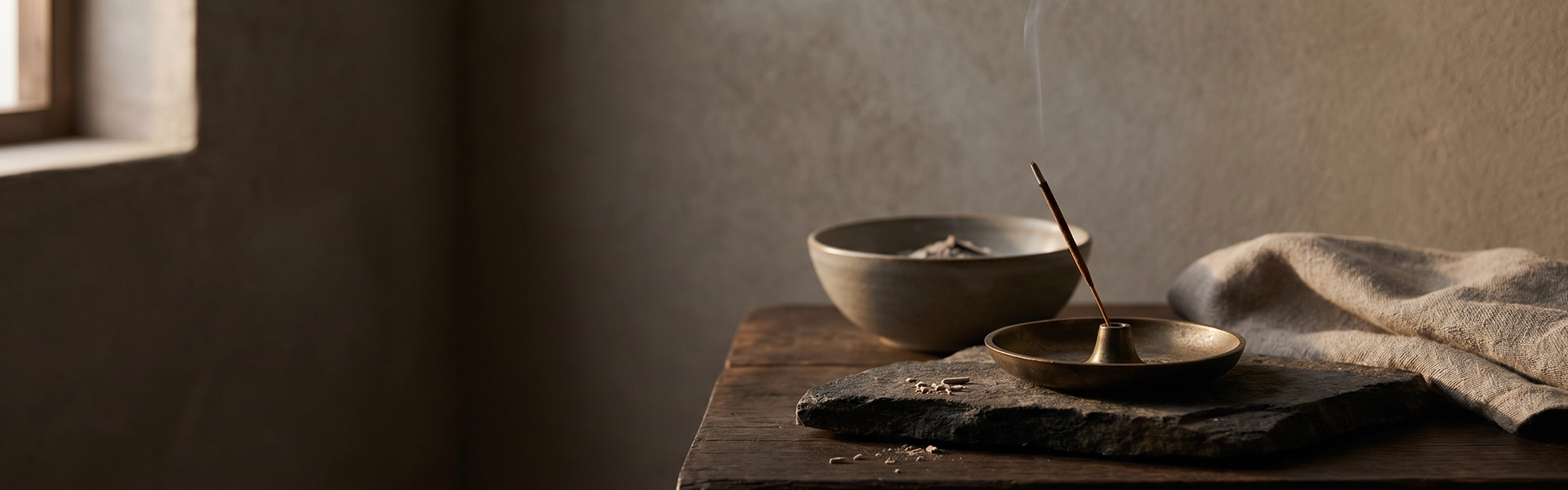
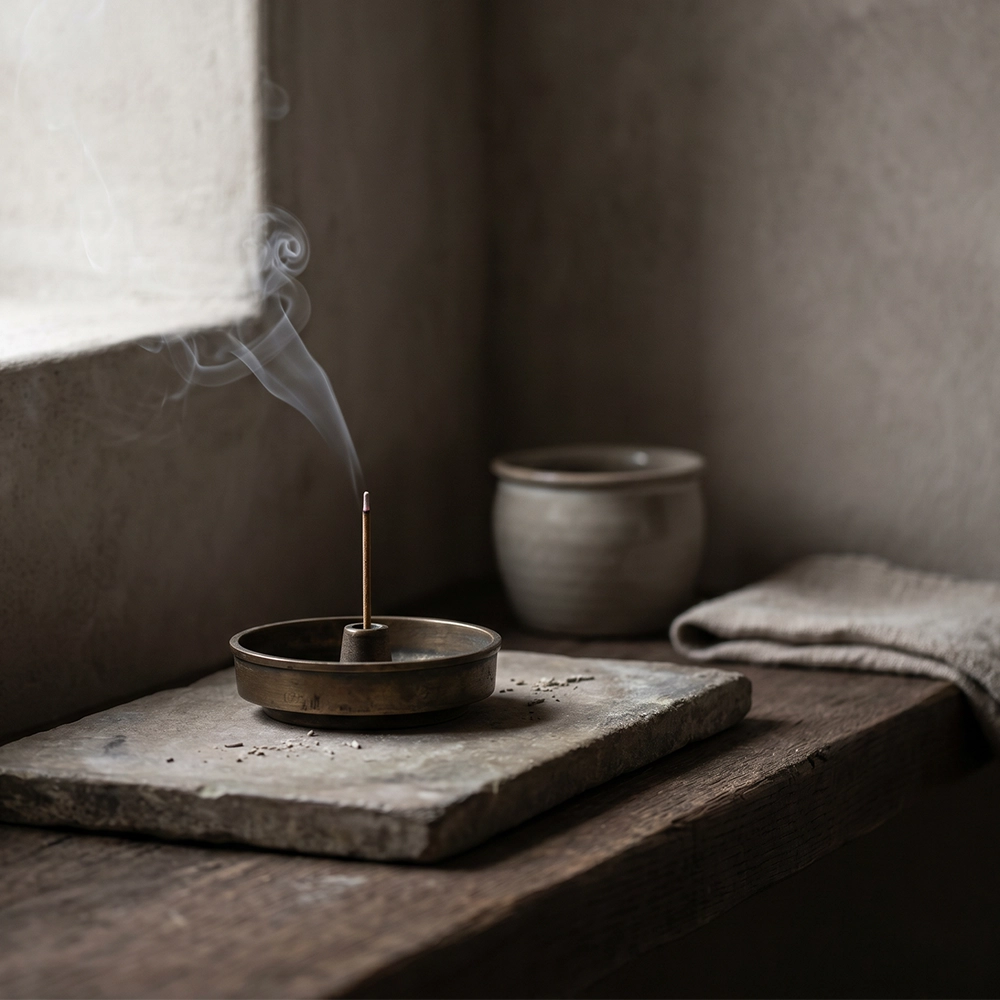
KTS incense holders are strongest when styled with restraint. Use dark wood, raw stone, aged metal, muted ceramic, linen, shadow, and one quiet ritual trace such as ash or soft smoke. Avoid crowded props, bright colors, overdecorated shrine styling, or anything that makes the scene feel like a market display.
11. What role can incense play in a quiet daily ritual?
Incense can mark a simple transition: beginning meditation, closing a workday, preparing a room, or returning attention to a quieter state. In the KTS context, incense ritual is not about guaranteed purification or removing negative energy. It is a sensory gesture of arrival, stillness, breath, and intentional atmosphere.
12. How should I care for an incense holder or incense burner?
Care depends on the specific material, so always follow the individual product page when available. In general, let ash cool fully before cleaning, keep the holder dry when appropriate, avoid harsh chemicals, and wipe gently with a soft cloth. Aged metal, ceramic, stone, patina, and ash-marked surfaces should be treated as tactile material elements.