Phurba Kila Meaning, Symbolic Boundary, and Ritual Placement
1. What is included in the Phurba Kila collection?
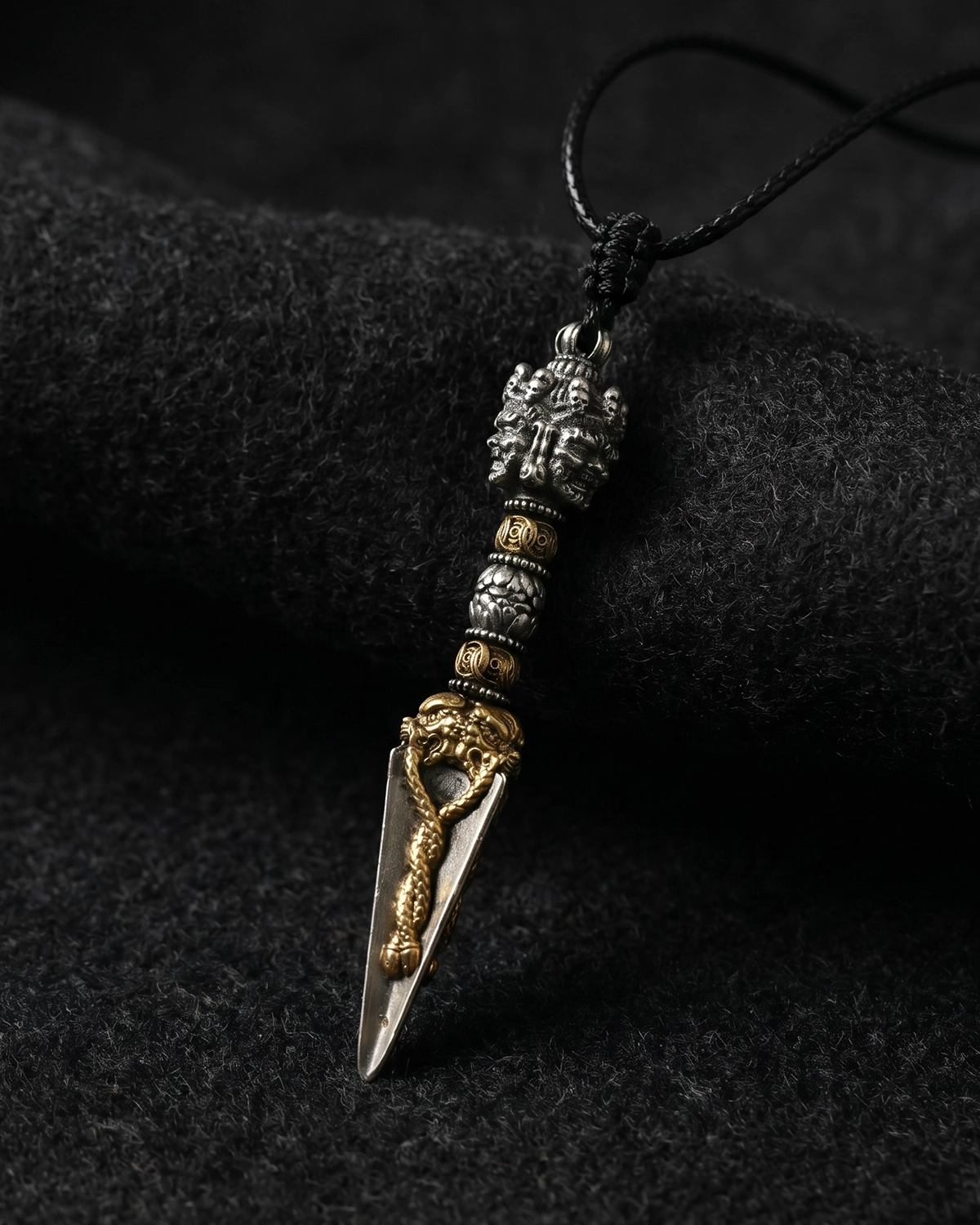
The Phurba Kila collection gathers KTS products shaped around Phurba-inspired and Kila-inspired forms, including pendants, necklaces, charms, altar objects, hanging pieces, symbolic decor, and small personal talismans. The exact styles may vary by product, but the category is centered on sculptural presence, boundary, grounding, firm intention, and quiet ritual use.
2. What does Phurba mean in the KTS context?
In the KTS context, Phurba is approached as a symbolic form associated with boundary, grounding, firm intention, and the cutting through of obstruction. The meaning is kept restrained and symbolic. A Phurba-inspired object is not presented as a weapon, magical dagger, supernatural tool, or authorized religious implement unless verified product data states otherwise.
3. What does Kila mean in this collection?
Kila is a related term often used for the Phurba form. In this collection, KTS uses Phurba and Kila as search-friendly names for objects inspired by the same pointed, sculptural ritual form. The modern KTS translation focuses on grounded boundary, clear intention, and material presence rather than exaggerated spiritual claims.
4. What does a Phurba pendant symbolize?
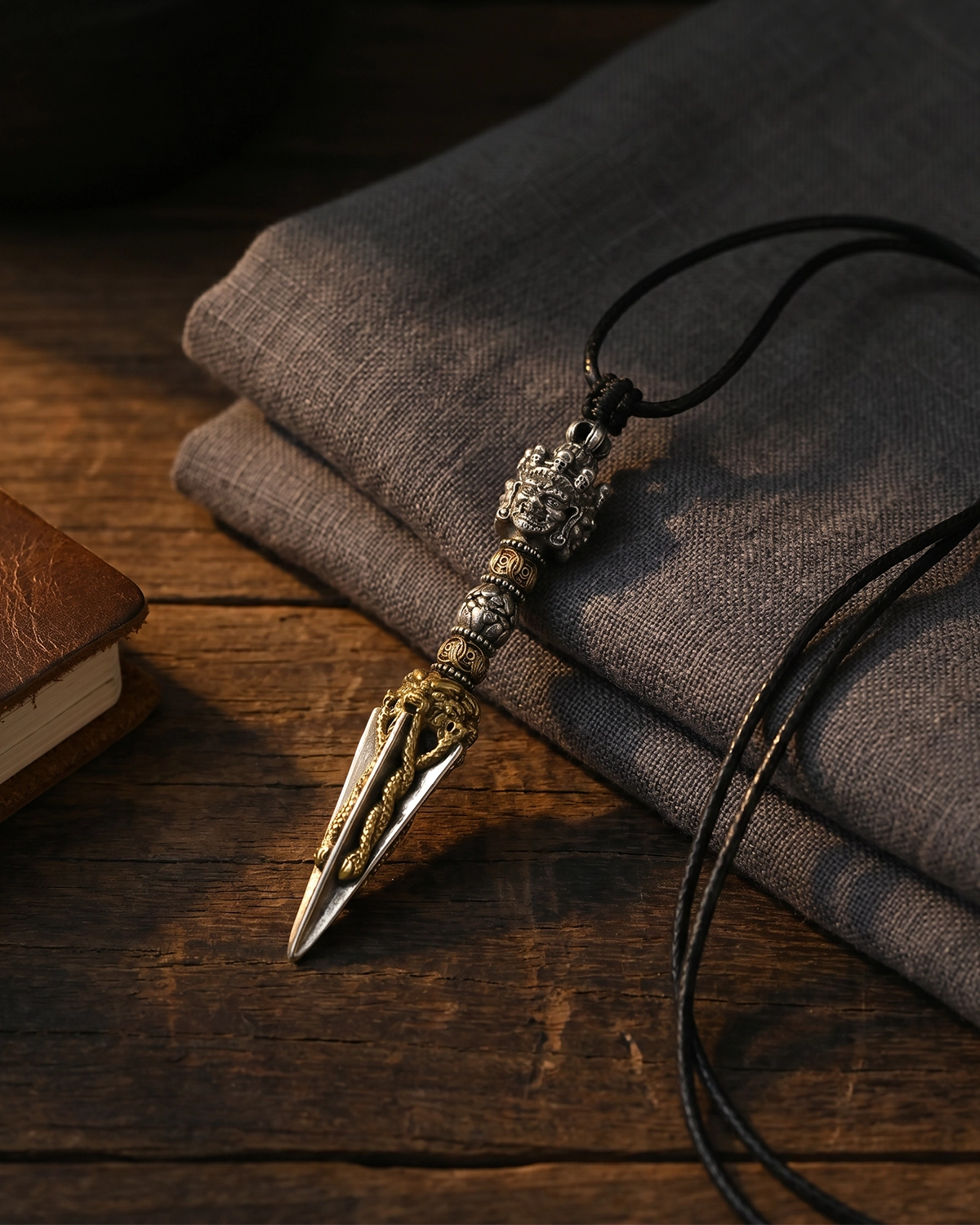
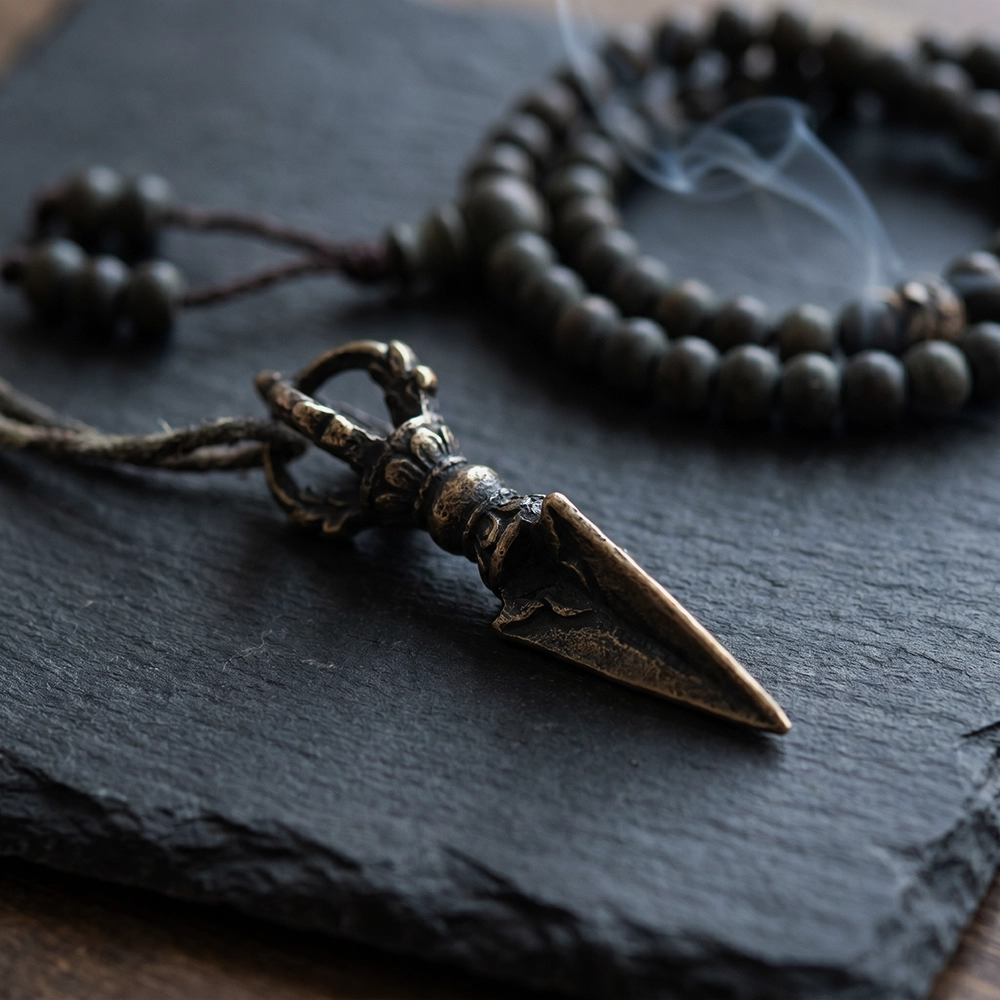
A Phurba pendant brings the pointed Phurba-inspired form close to the body as a small object of focus and boundary. It may suggest firm intention, inner steadiness, and symbolic protection as boundary. KTS frames the pendant as a personal material anchor, not as a magical tool, weapon, or guaranteed source of protection.
5. Is a Phurba necklace a personal talisman?
A Phurba necklace can function as a personal talisman when chosen for its form, weight, material tone, and repeated contact with the body. In the KTS world, a talisman is not a supernatural device. It is a quiet object of attention, boundary, memory, and return that moves with daily life.
6. Is a Phurba ritual object used here as a religious implement?
KTS treats Phurba-inspired ritual objects with cultural respect while presenting them for symbolic, aesthetic, and ritual-adjacent use. Unless a specific product page provides verified details, the pieces are not described as consecrated, monk-blessed, temple-sourced, antique, ritually used, or authorized religious implements.
7. Does Tibetan-inspired Phurba mean the item is made in Tibet?
No. Tibetan-inspired describes the symbolic and aesthetic direction of a Phurba object, not a verified origin claim. Unless a specific product page provides confirmed details, KTS does not claim that a Phurba is made in Tibet, monk-blessed, temple-sourced, antique, consecrated, or ritually used. The language remains respectful, symbolic, and claim-safe.
8. How should a Buddhist-inspired Phurba be approached respectfully?
A Buddhist-inspired Phurba should be approached with restraint, clarity, and cultural respect. KTS frames these objects as symbolic and aesthetic pieces for modern ritual living, not as religious performance or proof of spiritual authority. The strongest interpretation is sculptural boundary, grounding, and firm intention without exotic display or supernatural promise.
9. Where should a Phurba altar object be placed?
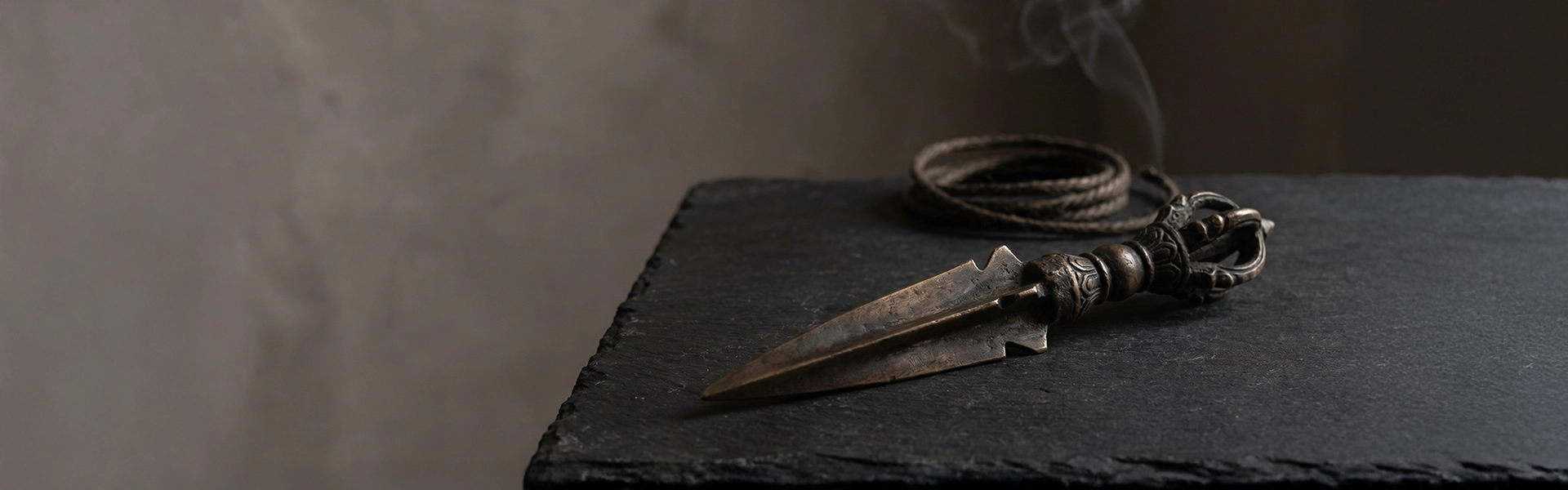
A Phurba altar object works best where its silhouette can remain clear and grounded: a personal altar, meditation shelf, dark wood desk, raw stone tray, bookshelf, or quiet ritual corner. Give the object breathing room and pair it with restrained materials such as aged metal, stone, shadow, dark wood, and linen rather than crowded shrine styling.
10. How can a Phurba charm be used?
A Phurba charm may be worn, carried, attached to a bag, placed near a desk, or kept in a quiet ritual space when the product design allows it. In KTS language, the charm may mark boundary, attention, and return. It should not be treated as a magical charm, safety guarantee, or literal protection device.
11. Does a Phurba provide protection?
KTS uses protection language for Phurba-inspired objects only in a symbolic and culturally respectful way. A Phurba may suggest boundary, steadiness, and quiet guardianship, but it is not presented as supernatural armor or guaranteed protection. The safest interpretation is symbolic protection as boundary and firm personal anchoring.
12. How should Phurba-inspired objects be styled?
Phurba-inspired objects are strongest when styled with restraint and enough space around their pointed silhouette. Use dark wood, raw stone, black slate, aged metal, linen, shadow, and one quiet ritual trace such as incense ash or soft smoke. Avoid weapon-like display, fantasy styling, bright colors, crowded props, or overdecorated shrine arrangements.