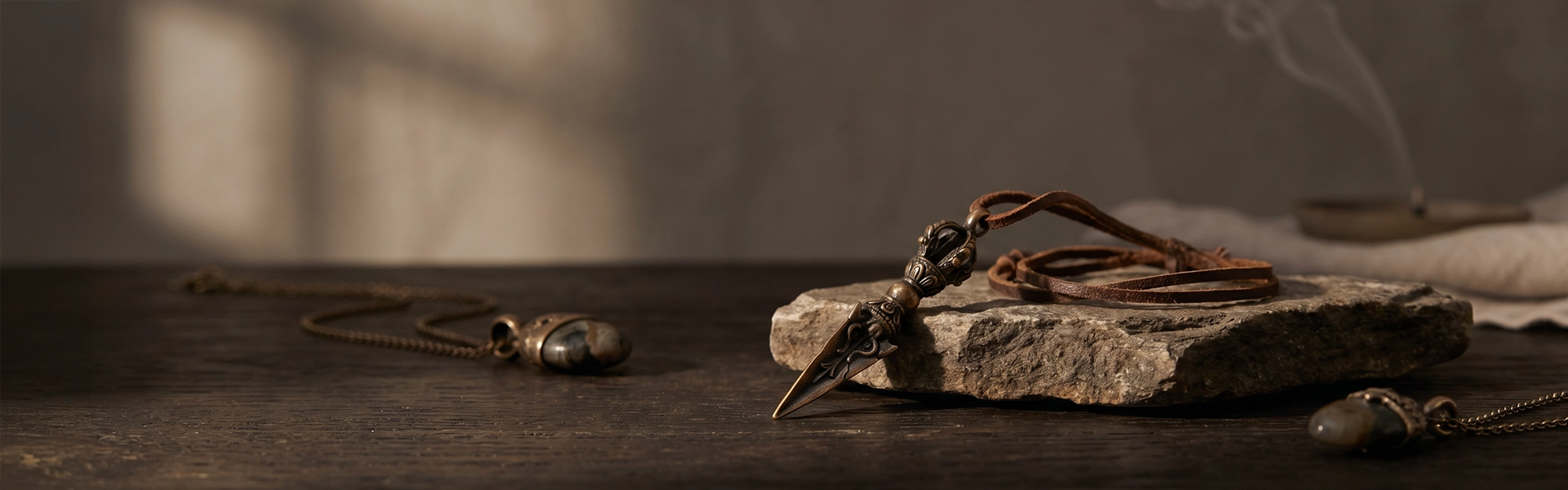

Necklaces, Pendants, and Personal Ritual Jewelry
1. What is included in the Necklace & Pendant collection?
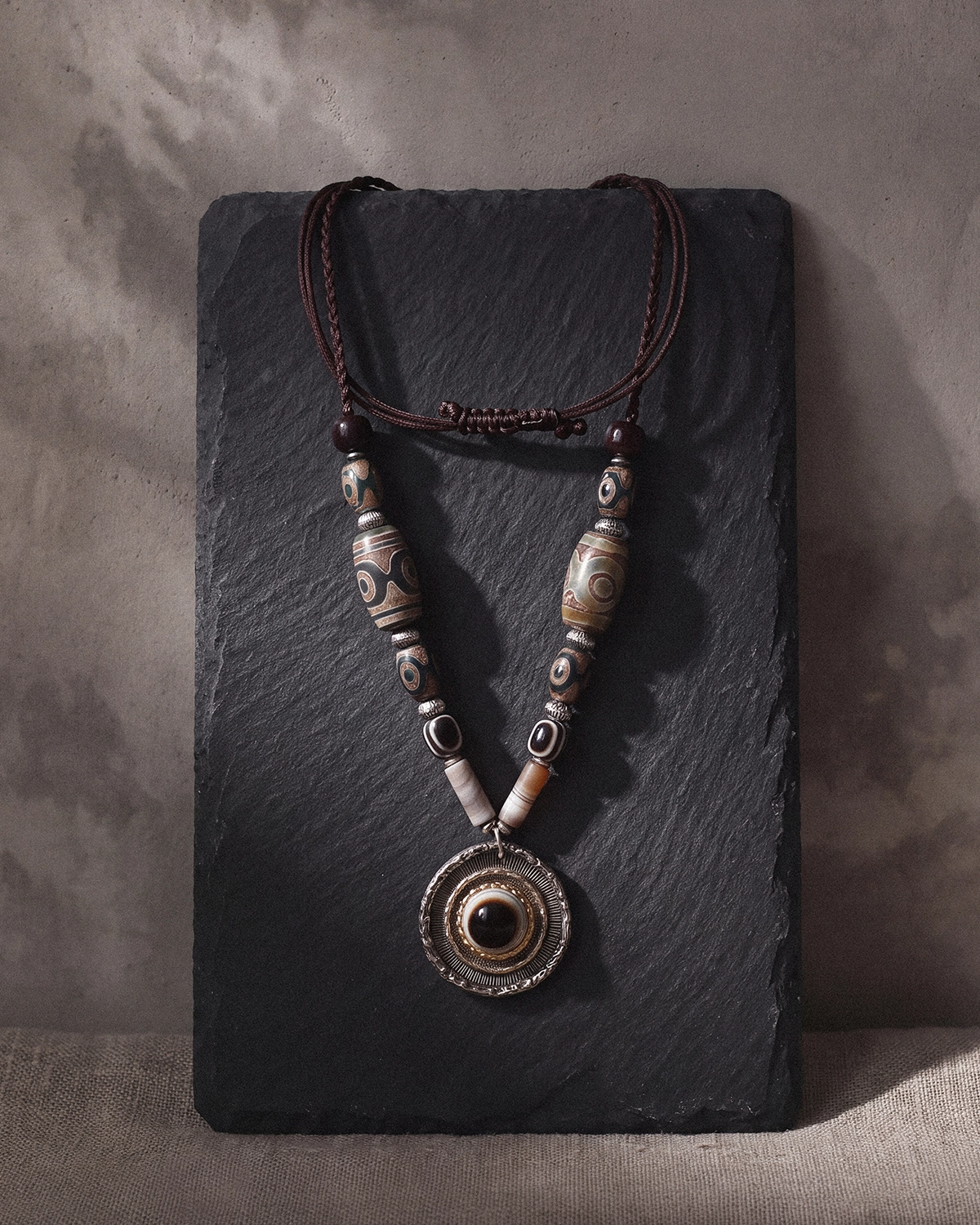
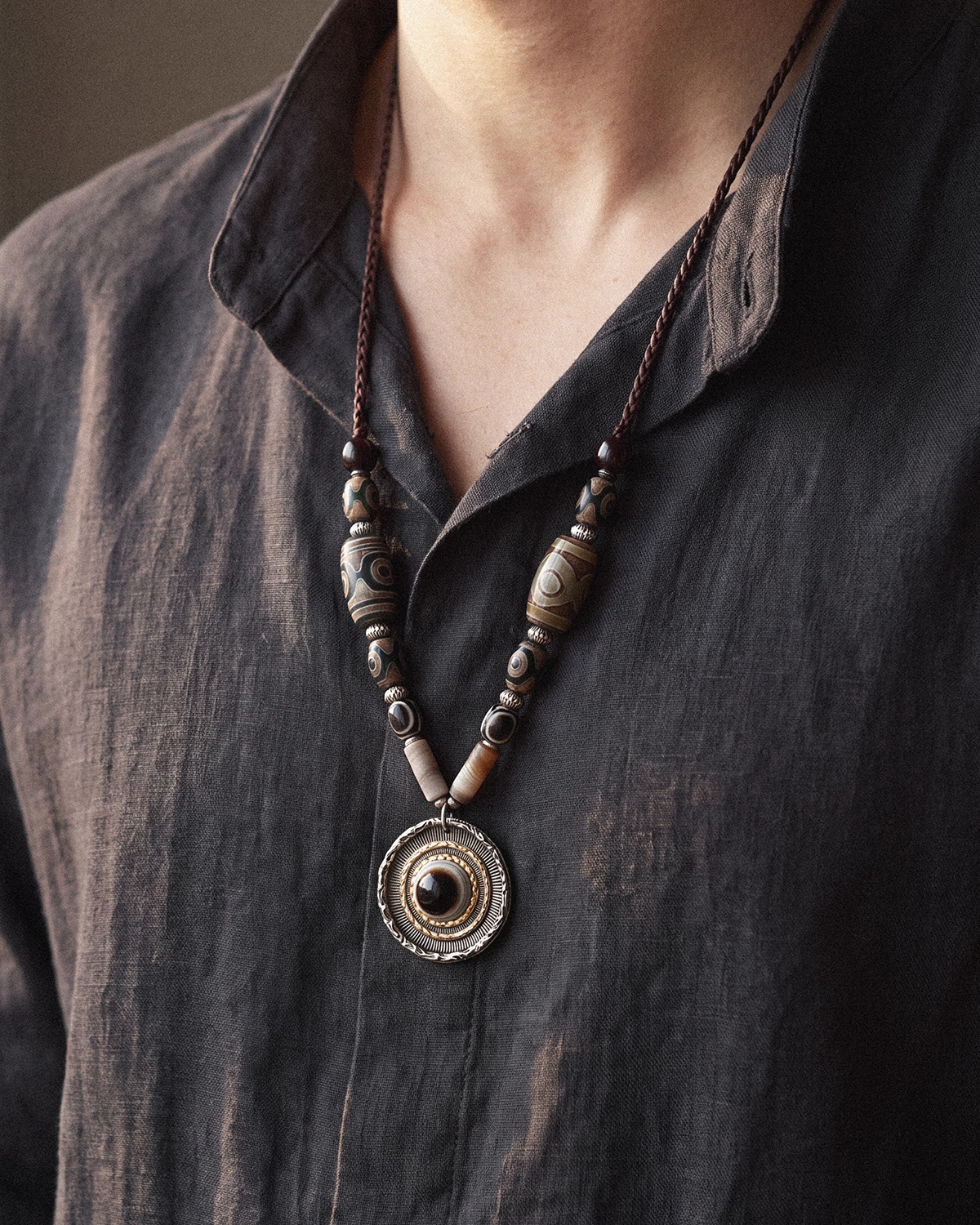
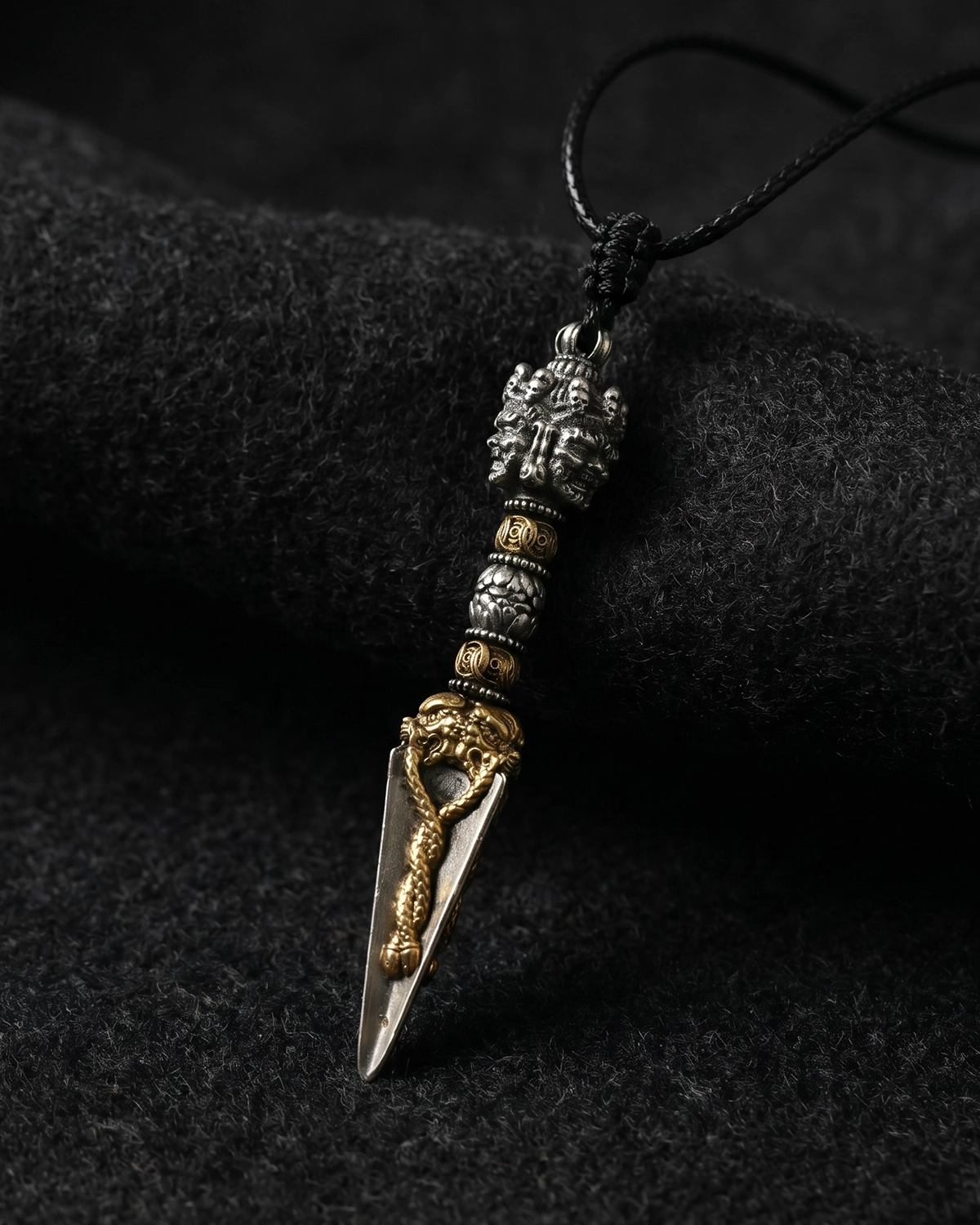
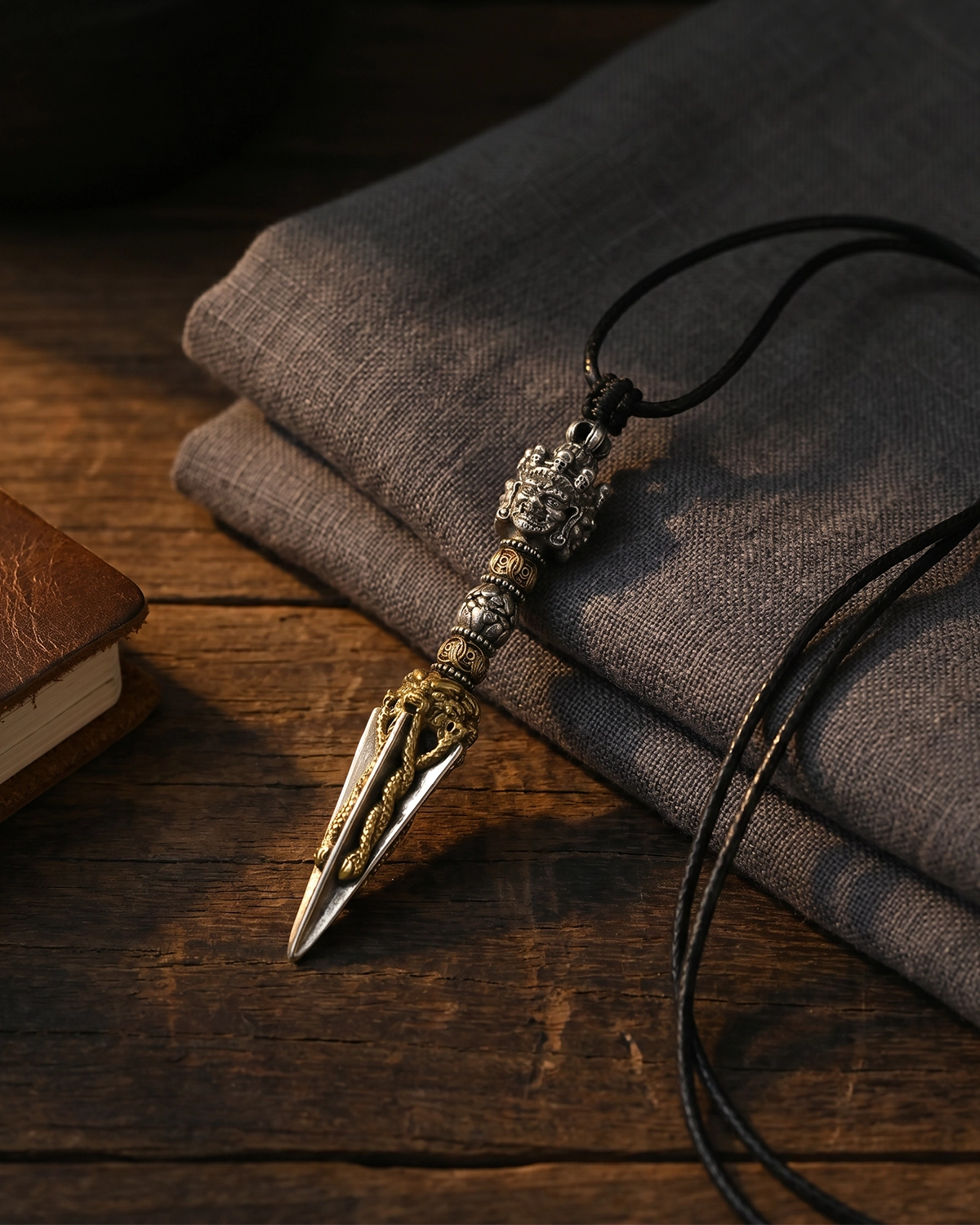
The Necklace & Pendant collection gathers wearable KTS pieces designed to sit close to the body, including symbolic pendants, cord necklaces, beaded necklace forms, talismanic charms, and Tibetan-inspired adornments. The exact forms may vary by product, but the category is centered on quiet ritual jewelry with material presence, symbolic meaning, and daily wearability.
2. What makes a pendant symbolic rather than purely decorative?
A symbolic pendant carries meaning through its form, motif, material, weight, or placement near the heart and chest. In the KTS context, a pendant may serve as a reminder of intention, boundary, grounding, clarity, or devotion. Its value is not in supernatural claims, but in the relationship between symbol, material, body, and daily attention.
3. What is a ritual necklace in the KTS context?
A ritual necklace is a wearable object that supports a private sense of return, intention, and symbolic presence. It may be worn during ordinary daily life, travel, meditation, work, or quiet transitions between spaces. KTS ritual necklaces are not presented as magical tools; they are personal anchors shaped by Himalayan-inspired symbolism and restrained material beauty.
4. Does Tibetan-inspired mean the pendant is made in Tibet?
No. Tibetan-inspired describes the symbolic and aesthetic direction of a piece, not a verified origin claim. Unless a specific product page provides confirmed details, KTS does not claim that a pendant is made in Tibet, monk-blessed, temple-sourced, antique, consecrated, or ritually used. The language remains respectful, symbolic, and claim-safe.
5. How should a spiritual necklace be understood?
A spiritual necklace should be understood as a meaningful wearable object, not as a guarantee of luck, healing, wealth, or protection. Within KTS, spiritual meaning is translated into grounded ideas such as symbolic boundary, inner steadiness, intention, clarity, devotion, and memory. The necklace becomes a quiet point of contact between body, symbol, and daily life.
6. Can a pendant be used as a protection symbol?
A pendant may carry protective symbolism when its motif, form, or cultural inspiration points toward boundary, guardianship, or steadiness. KTS uses protection language symbolically and respectfully, never as a promise of supernatural defense. A protection pendant is best understood as a personal reminder of boundary and inner steadiness rather than literal armor.
7. What is a personal talisman necklace?
A personal talisman necklace is a wearable object chosen for meaning, touch, and symbolic presence. It may become part of a daily rhythm because it rests close to the body and can be felt during movement, work, travel, or stillness. In the KTS world, a talisman is a material reminder of intention, not a magical device.
8. Is a necklace or pendant a meaningful gift?
Yes. A necklace or pendant can be a meaningful gift when chosen for its symbolism, material tone, and relationship to the person receiving it. It may express steadiness, blessing as intention, quiet protection as boundary, devotion, grounding, or clarity. The strongest gift language is sincere and symbolic, not based on promises of luck, healing, or transformation.
9. How should I choose a pendant from this collection?
Begin with the role you want the pendant to play. Choose a stronger sculptural form for boundary and focus, a quieter motif for grounding or devotion, a beaded or corded form for tactile daily wear, or a smaller pendant for subtle symbolic presence. Then consider scale, material tone, neckline, weight, and how often you want to wear it.
10. How should KTS necklaces and pendants be styled?
KTS necklaces and pendants are strongest when styled with restraint. Pair them with natural fabrics, dark neutrals, linen, wool, cotton, simple tailoring, or quiet layered clothing rather than loud festival styling. The piece should feel like a personal ritual object integrated into a modern Western wardrobe, not a costume, trend accessory, or exotic display.
11. Can a pendant be worn during meditation or quiet practice?
A pendant may be worn during meditation, journaling, breath practice, or quiet personal ritual if it helps create a sense of symbolic focus. It can serve as a tactile point of return when held or noticed. KTS does not frame the pendant as a religious requirement or spiritual shortcut; it remains a personal object of intention.
12. How should I care for a KTS necklace or pendant?
Care depends on the specific material, so always follow the individual product page when available. In general, keep necklaces and pendants dry, avoid harsh chemicals, wipe gently with a soft cloth, and store them away from heavy friction or tangled chains. Aged metal, cord, beads, and patina should be treated as tactile surfaces rather than polished fashion finishes.