Mala Beads, Prayer Beads, and Bodhi Seed Ritual Objects
1. What is included in the Mala & Prayer Beads collection?
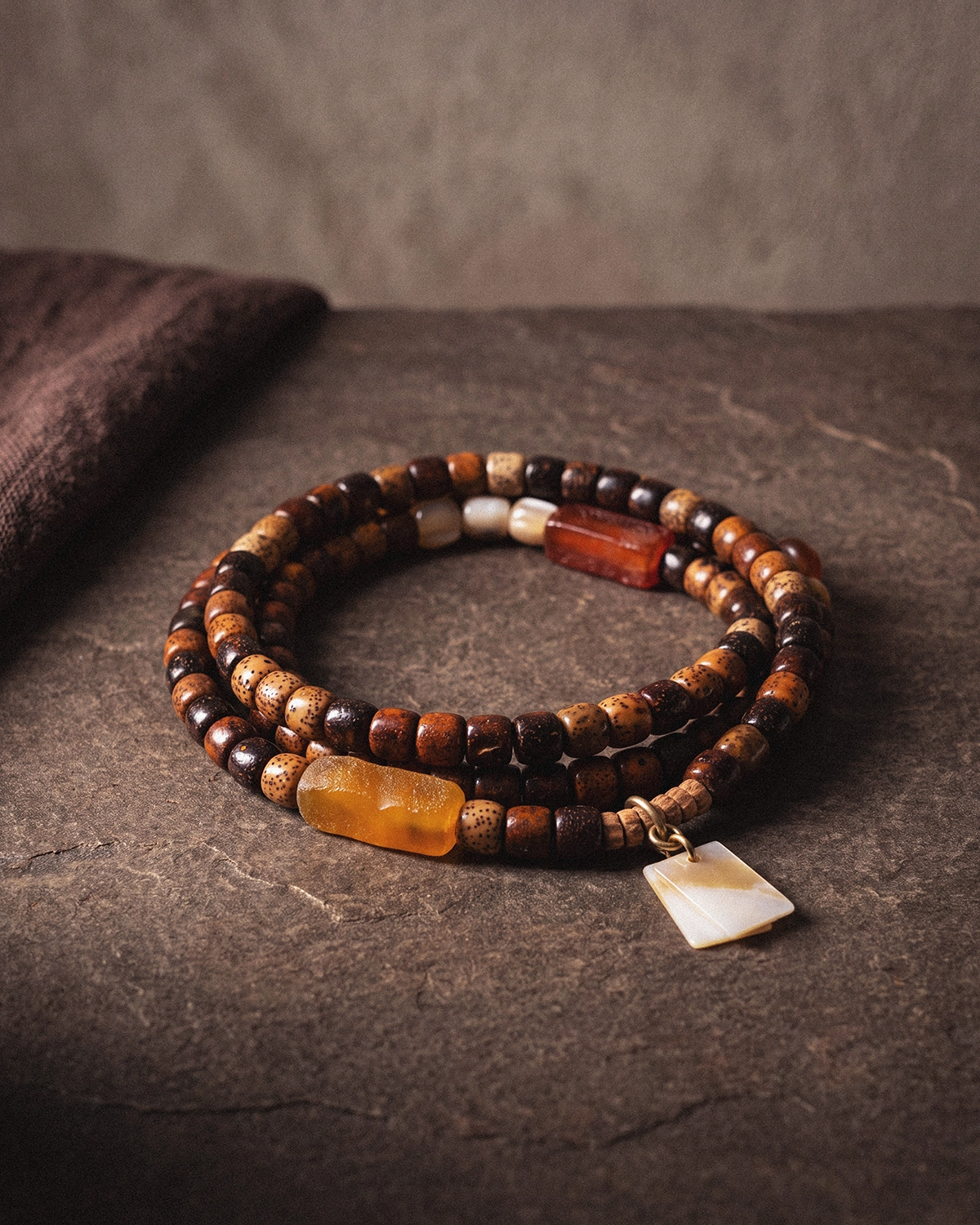
The Mala & Prayer Beads collection gathers tactile KTS bead pieces such as mala beads, prayer beads, bodhi seed malas, wrist malas, wood bead strands, beaded bracelets, corded forms, and Tibetan-inspired bead objects. The exact styles may vary by product, but the category is centered on repetition, touch, grounding, symbolic presence, and quiet ritual use.
2. What are mala beads in the KTS context?
Mala beads are understood as tactile objects of repetition, focus, and return. In the KTS context, they may support moments of meditation, breath, prayer, journaling, or quiet daily pause, but they are not presented as magical tools or guaranteed spiritual shortcuts. Their meaning lives in touch, rhythm, material presence, and chosen intention.
3. How should prayer beads be approached respectfully?
Prayer beads should be approached with restraint and cultural respect. KTS frames them as Himalayan-inspired or Buddhist-inspired objects connected to repetition, attention, grounding, and personal ritual, not as novelty accessories or exotic decoration. Unless a product page provides verified details, the beads should not be described as monk-blessed, temple-sourced, consecrated, antique, or ritually used.
4. What makes bodhi beads meaningful?
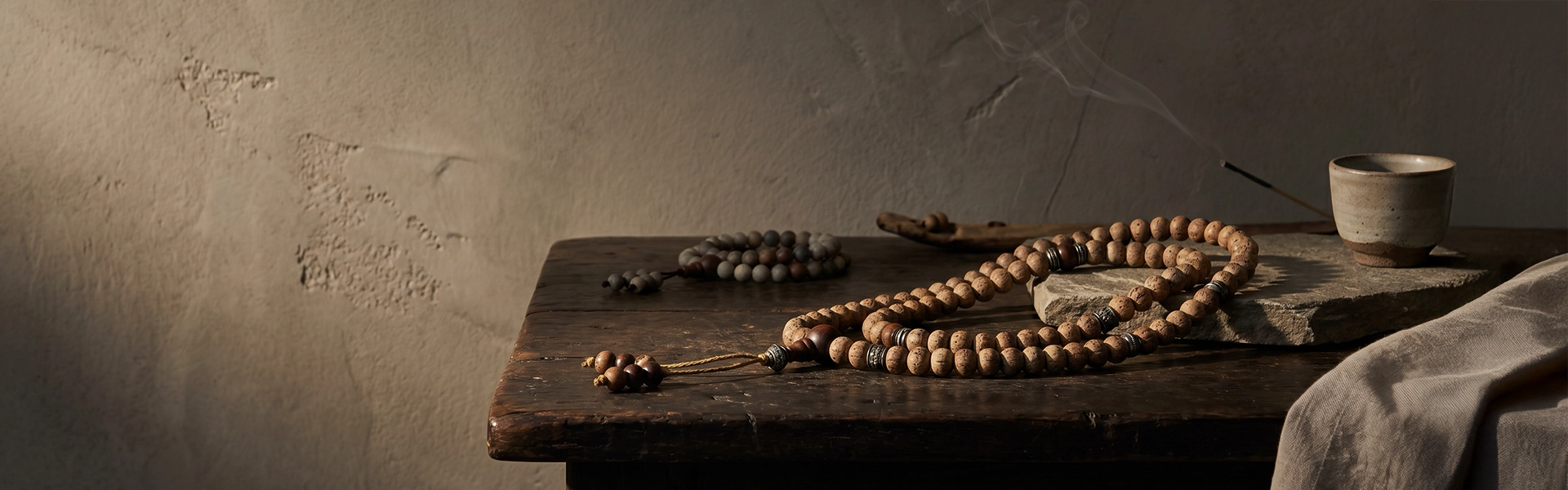
Bodhi beads are often valued for their natural texture, earthy presence, and association with contemplative practice. In the KTS world, bodhi beads can be understood as grounding, tactile reminders of patience, repetition, and return. Their value is symbolic and material, not based on promises of enlightenment, healing, luck, or supernatural protection.
5. What is a bodhi seed mala used for?
A bodhi seed mala may be used as a tactile companion for meditation, breath practice, quiet prayer, or daily intention. The natural bead texture gives the hand something steady to return to. KTS presents bodhi seed malas as symbolic objects of grounding and attention rather than religious requirements, miracle objects, or guaranteed sources of spiritual progress.
6. How is a wrist mala different from a full mala strand?
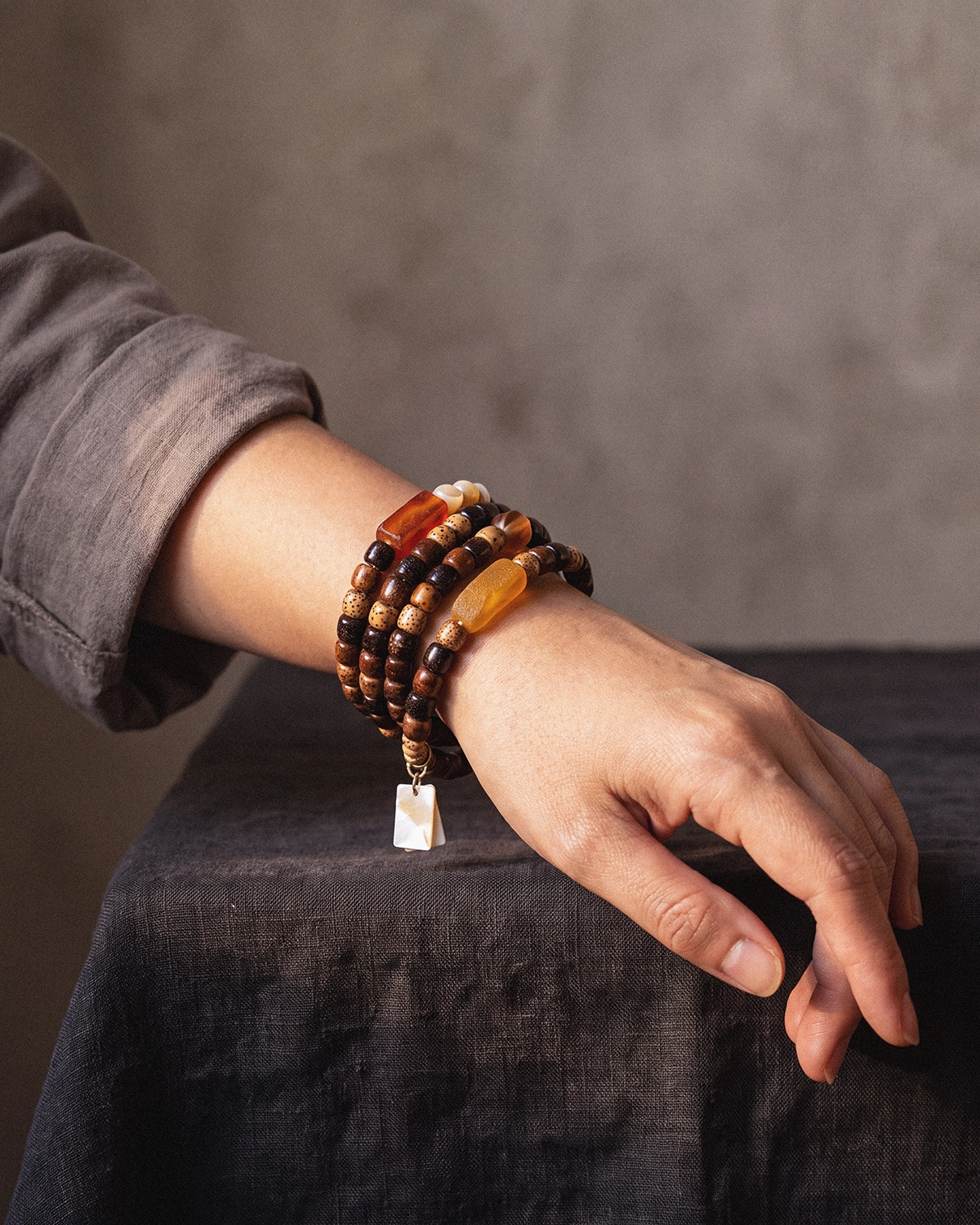
A wrist mala is usually shorter and designed to sit on the wrist, making it easier to wear through daily movement. A full mala strand may be held, worn, placed on an altar, or used during longer moments of repetition. Both can support rhythm and attention, but they serve different contexts of body, practice, and daily ritual.
7. Can mala or prayer beads be used for meditation?
Mala or prayer beads may be used during meditation if they help create a rhythm of touch, breath, or focus. Some people hold each bead as a point of return, while others keep the beads nearby as a material reminder of stillness. KTS does not frame the beads as a spiritual shortcut; they remain personal ritual objects.
8. Does Tibetan-inspired mean the prayer beads are made in Tibet?
No. Tibetan-inspired describes the symbolic and aesthetic direction of the beads, not a verified origin claim. Unless a specific product page provides confirmed details, KTS does not claim that prayer beads are made in Tibet, monk-blessed, temple-sourced, antique, consecrated, or ritually used. The language remains respectful, symbolic, and claim-safe.
9. Can mala beads be worn as a bracelet?
Some mala-inspired pieces are designed as wrist malas or beaded bracelets, allowing the bead rhythm to stay close to the body during ordinary life. Worn at the wrist, the beads can become a tactile reminder of intention, grounding, or return. Their role is symbolic and personal, not a promise of protection, luck, or healing.
10. How should I choose mala or prayer beads from this collection?
Begin with how you want the beads to live with you. Choose a full mala strand for a stronger ritual presence, a wrist mala for daily contact, bodhi beads for natural texture, darker beads for grounding, or a focal bead for symbolic emphasis. Then consider scale, bead feel, cord strength, color tone, and use context.
11. How should KTS mala and prayer beads be styled?
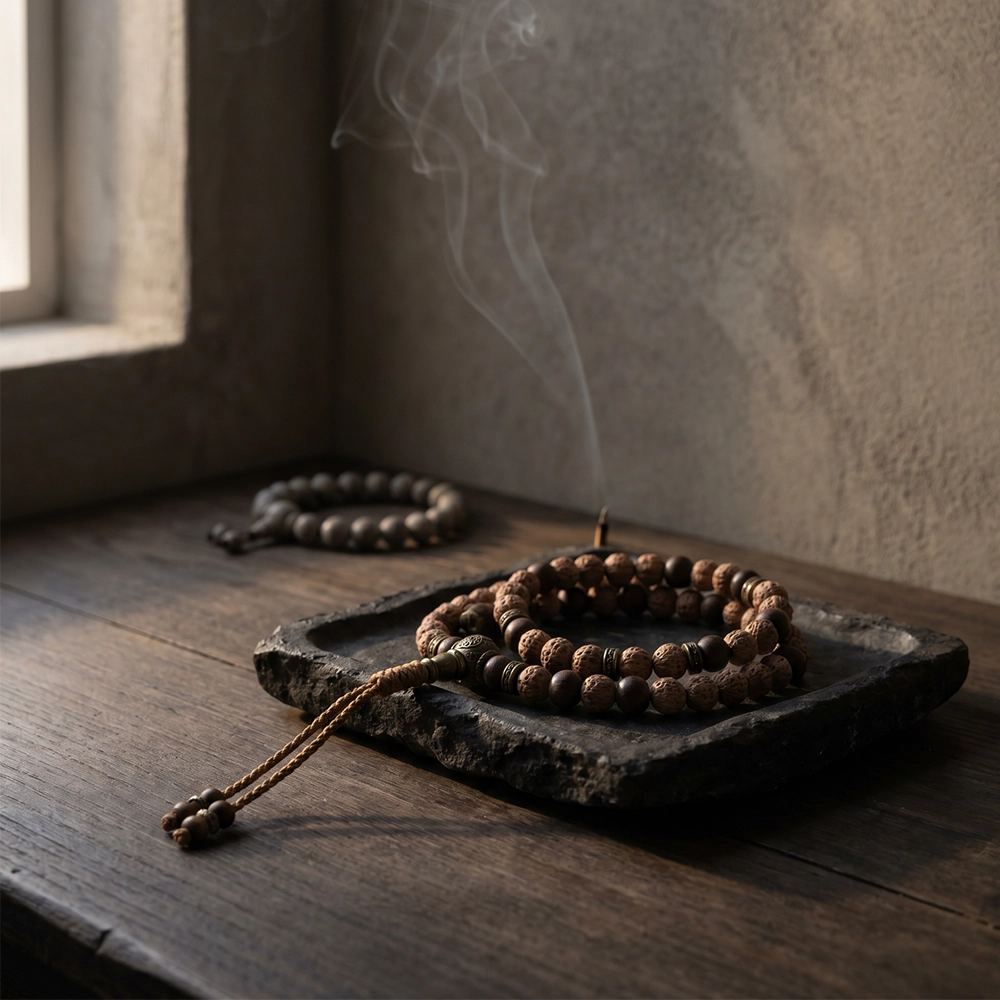
KTS mala and prayer beads are strongest when styled with restraint. They may rest on a personal altar, meditation shelf, dark wood desk, raw stone surface, linen cloth, or quiet tray. If worn, they pair best with natural fabrics, dark neutrals, simple tailoring, and calm layers rather than festival styling, costume dressing, or crowded spiritual display.
12. How should I care for mala and prayer beads?
Care depends on the specific material, so always follow the individual product page when available. In general, keep mala and prayer beads dry, avoid harsh chemicals, wipe gently with a soft cloth, and store them away from heavy friction or sharp objects. Bodhi seeds, wood beads, cord, aged metal, and patina should be treated as tactile natural surfaces.