

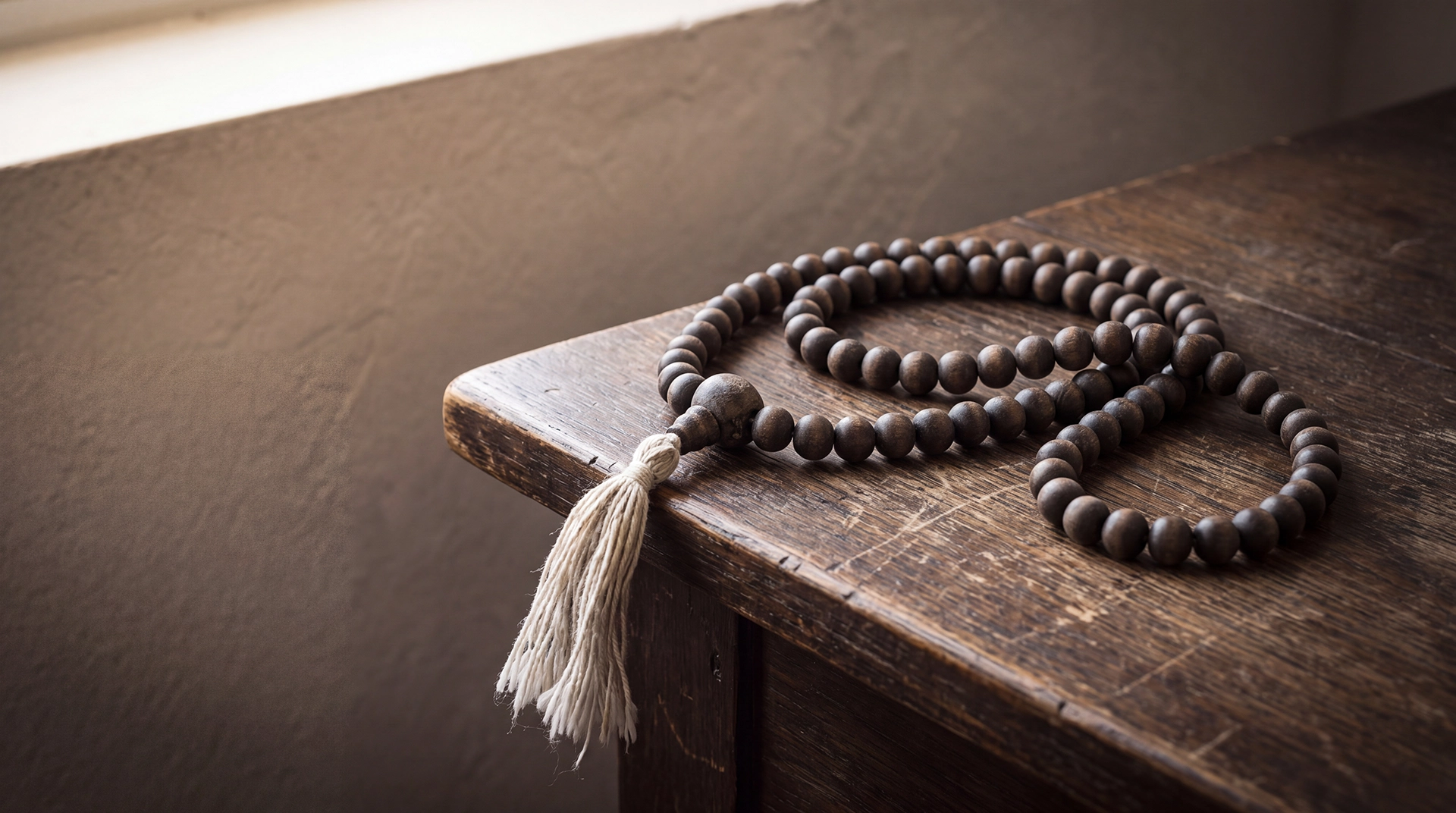
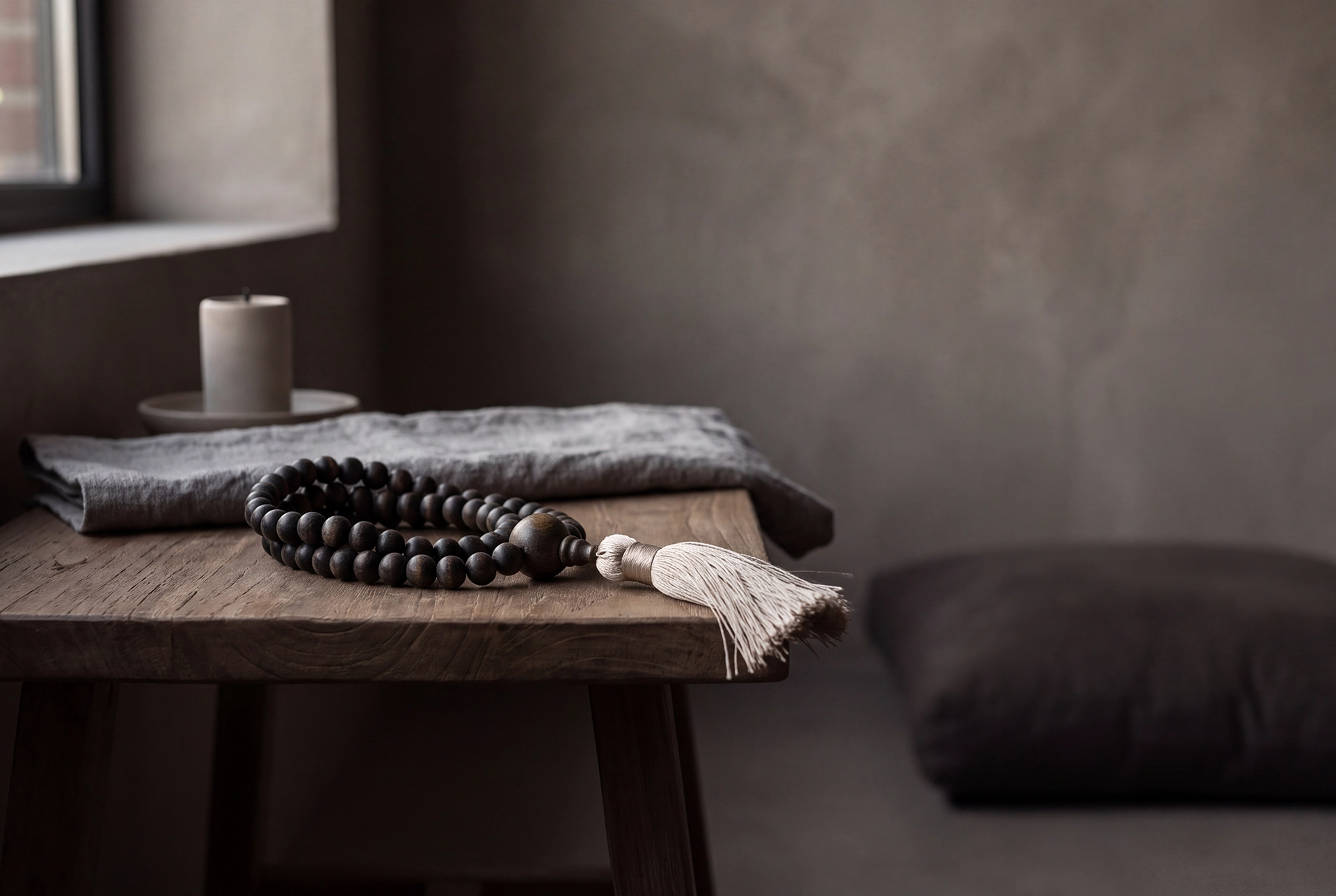
A mala is a strand of beads used to keep count during recitation. The same object appears as a full-length necklace, as a short bracelet wound several times around the wrist, and as a worn strand kept in a coat pocket or on a bedside table. What makes it difficult to describe in a single sentence is that a mala carries meaning in several places at once — the counting beads, the larger guru bead, the tassel, and the total number of beads.
This guide defines the mala, explains what each of those parts is traditionally understood to mean, describes how a mala is worn and handled from day to day, and offers a quiet way to think about choosing or giving a first one. Kailash to Shambhala works with Himalayan-inspired ritual objects, and the mala is one of the forms the brand returns to most often: made to be counted, handled, and kept close rather than displayed behind glass.
What Are Mala Beads?
A mala is a string of beads used to count recitation, most commonly with 108 counting beads and one larger bead known as the guru bead. The word describes a practice tool before it describes a piece of jewelry, which is why the same object can be a long necklace, a wrist mala, or a strand that never leaves a meditation corner.
The names you are likely to have met all point to the same class of object. Mala is the term usually retained in English. Japa mala names the mala specifically in its recitation role, since japa refers to the practice of repeating a phrase or mantra. Prayer beads and Buddhist beads are broader labels used for the same kind of object in more than one tradition, and mantra beads approaches it from the side of what is being repeated. These are overlapping terms rather than competing ones, and no single one of them is more correct than the others.
Terminology and Common Names
Malas are commonly associated with recitation practice in Hindu, Buddhist, and Tibetan-influenced traditions — which is one reason customs around them vary so much. Where a specific custom appears in this article, it is described as something found in some traditions rather than as a rule that applies to all of them.
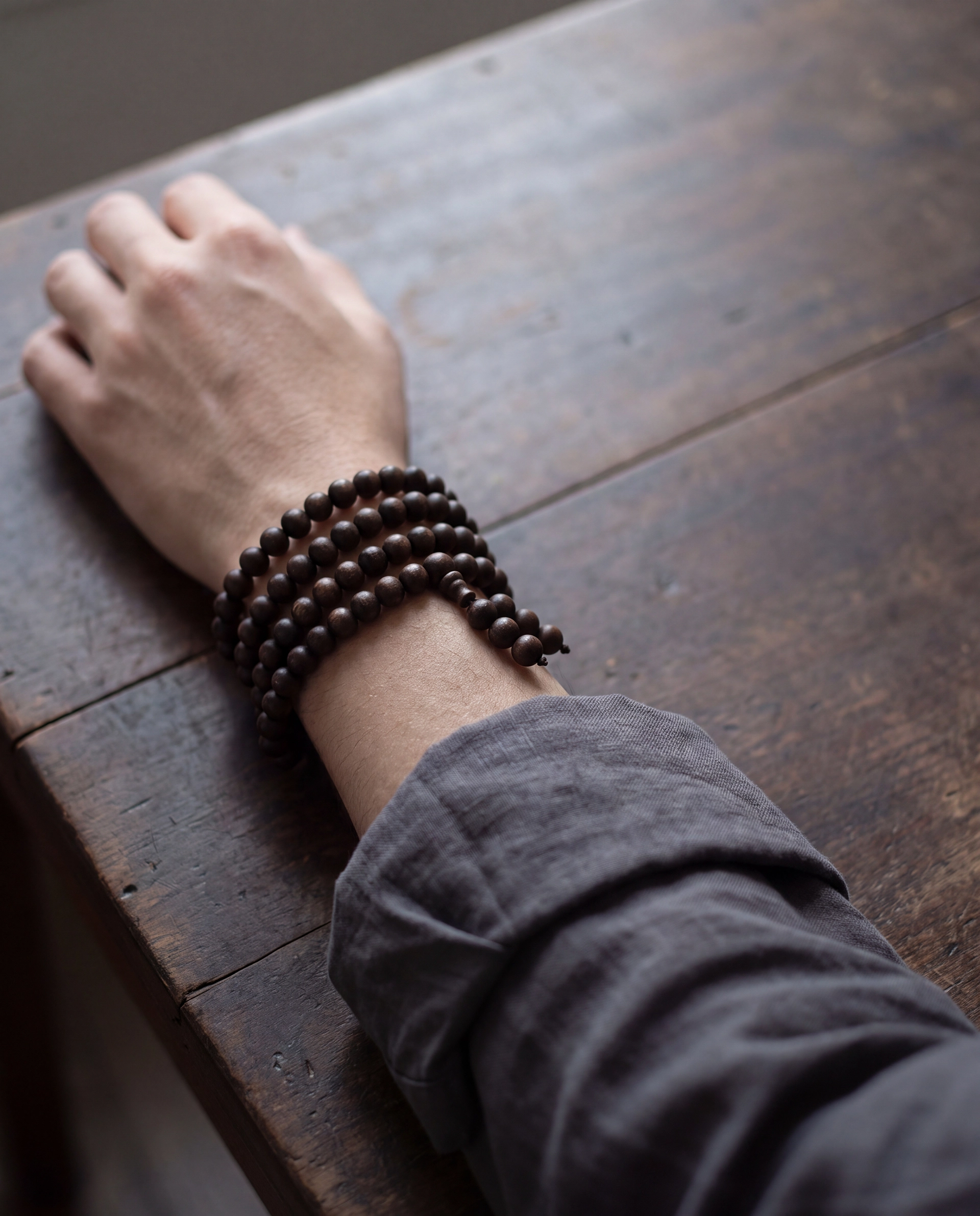
Two forms come up most often. The full-length mala is a long strand, usually with 108 counting beads, worn as a necklace or kept for practice. The wrist mala, sometimes called a mala bracelet, is a shorter strand made to sit on the wrist, either wrapped several times or strung to a fixed circumference.
A mala does not depend on a single material or a single design. What it depends on is use: a bead is handled, counted, and returned to. That handling is the thread that runs through everything the mala is understood to mean.
What Do Mala Beads Symbolize?
Mala beads symbolize repetition, attention, and return rather than one single idea. Their meaning is carried by four named parts: the counting beads, the guru bead, the tassel, and the total count. Readers asking what a mala means are usually asking about one of those layers, and separating them makes the answer much clearer.
The counting beads come first because they define the object. A mala is a counting aid, and its meaning is bound up with recitation rather than with decoration — the beads exist to hold a number, and the number exists to hold attention.
Beyond the count, the beads themselves vary. They are often chosen for material, for tradition, or for personal significance, so two malas that look similar can mean quite different things to the people who own them. Meaning is not only assigned by a tradition; it also accumulates through use.
The Guru Bead
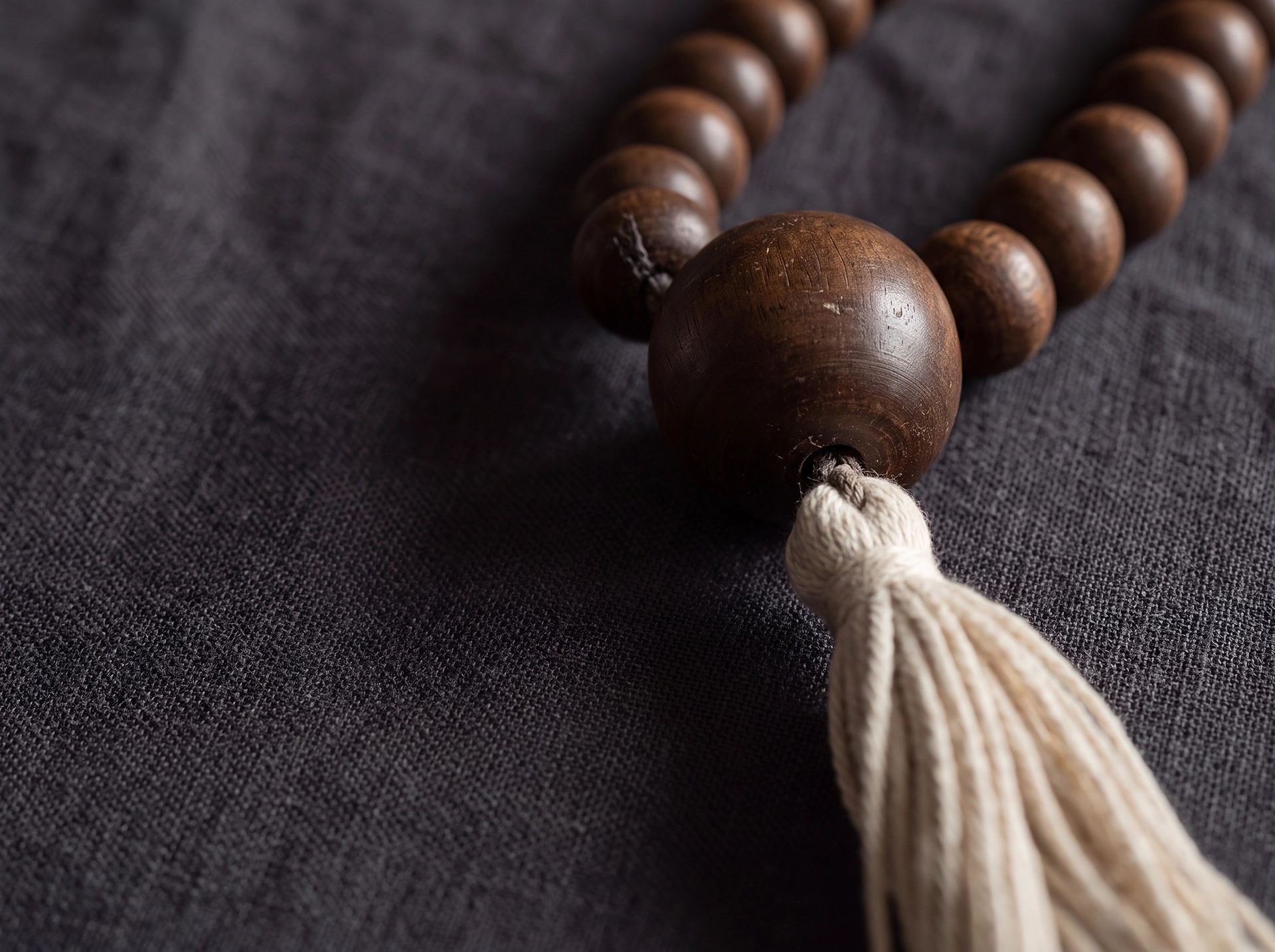
A mala usually includes one larger, distinct bead — the guru bead, referred to in some usage as the meru bead. It traditionally sits where the strand joins, and it is the point from which the mala is held.
The name points to the teacher, and the bead is commonly described as a marker of the source of a practice rather than as a bead to be counted. It is treated with a certain care for that reason, and in most descriptions it sits above the counting beads rather than within them. Beyond that, explanations differ between traditions, and this is a detail best left attributed rather than fixed.
The Tassel
Below the guru bead, a tassel finishes the strand. Its main work is structural and visual: it covers the knot where the two ends meet, gives the mala enough weight to hang evenly, and marks the end of the counting.
Tassels are sometimes given symbolic readings, but those readings are not standardized, and style varies widely between makers and traditions. A tassel may be silk or cotton, long or short, matched to the beads or deliberately contrasting. Treating it as a finish rather than a symbol is usually the more accurate reading.
The Traditional Bead Count
Many malas use a set number of counting beads, most commonly 108. That number is broadly stable as a shared convention, and it gives a recitation practice a clear shape and an end point.
Why 108 specifically is a question with more than one answer. Different traditions offer different explanations, some of them numerical and some practical, and none of them is the single authorized meaning. Rather than assign one fixed interpretation, it is more honest to describe 108 as the common standard for a full-length mala. Shorter malas use smaller counts, and those counts vary by maker and tradition.
Mala Beads in Tibetan-Influenced and Buddhist-Influenced Contexts
Within Tibetan-influenced and Buddhist-influenced practice, a mala is understood as a support for recitation — a counted object rather than an ornament, even when it is worn as one.
The object is held, moved, and returned to. That is the whole of its work: a handheld point of focus across a repeated practice, with the hand keeping count so the attention can stay on what is being repeated. Between sessions, a mala is often worn at the wrist, looped around the neck, or hung near the place where someone sits.
Customs differ between traditions and between individuals, so what follows is a description of shared threads rather than a ruling. A mala is also an object that ages with use: wood darkens, stone smooths, cords soften. That wear is one of the ways a mala becomes personal, and it is a reason many practitioners keep the same strand for years.
Wearing and Handling a Mala: Necklace, Wrist Mala, and Daily Use
The two main forms are the full-length mala worn as a necklace and the shortened wrist mala worn at the wrist. Both are the same object at different scales, and the choice is usually a question of how the mala will be used.
A wrist mala is often chosen for daily wear or for shorter practice, since it stays with the wearer and can be used in a few spare minutes. A full-length mala is used for longer recitation, where 108 beads give the practice its full shape, and it is often kept at home for that reason.
In daily handling, a mala rests where the person is: on the wrist, around the neck, on a desk, beside a cushion. Between uses it is commonly hung or kept in a small pouch, away from keys, damp, and anything that might catch the cord. How to wear a mala necklace is largely a matter of preference — long, doubled, or with the guru bead and tassel resting at the chest. There is no single convention, and the way someone wears it usually follows tradition or personal habit.
Mala Necklace and Wrist Mala
| Form | Typical Use | How It Is Worn |
|---|---|---|
| Full-length mala (commonly 108 counting beads) | Longer recitation, home practice, wearing as a necklace | Around the neck, often with the guru bead and tassel resting at the chest |
| Wrist mala / mala bracelet | Shorter practice, everyday wear | Wrapped around the wrist, sometimes several times |
The difference between the two is one of use and proportion, not of meaning.
How a Mala Is Used in Practice
A mala is typically held in one hand and worked with the thumb, one bead moved for each repetition of a phrase or mantra. When the hand reaches the guru bead, the common instruction is to reverse direction rather than cross over it, though this varies between traditions.
A full cycle ends where it began, which is part of what gives the practice its rhythm. A wrist mala works the same way over a shorter cycle. Neither form requires a formal practice: someone can hold a mala simply to slow down, or to give a few minutes a shape.
Do Mala Beads Have Meaning by Color?
Not in a fixed, one-to-one way. There is no universal color code for malas, and no chart of colors and meanings that holds across traditions.
Most of what looks like color symbolism in a mala arrives through material. A stone, a wood, or a seed brings its own color and grain, and the choice is usually made for feel, weight, and appearance rather than for a coded meaning. Where color does carry symbolic weight, it usually sits inside a specific visual tradition — for example, in the use of color in Tibetan Buddhist painting and ritual — where colors work as part of a wider visual language rather than as individual meanings that can be lifted out and applied to any strand.
For Kailash to Shambhala, color is a material question first. A darker bead reads as quieter; a paler one reads as lighter on the wrist. Those are visual judgments, and they are a reasonable basis for choosing — more reasonable, in most cases, than a list of color meanings that no single tradition actually keeps.
Choosing or Gifting a First Mala
There is no single correct first mala. The choice follows how it will be used, which form suits the wearer, and which material feels right in the hand.
Start with form. If the mala is intended for recitation, a full-length strand is the natural choice, because the count is part of the practice. If it is intended for everyday wear or shorter pauses, a wrist mala is usually more practical — it stays on, and it can be used without being taken out.
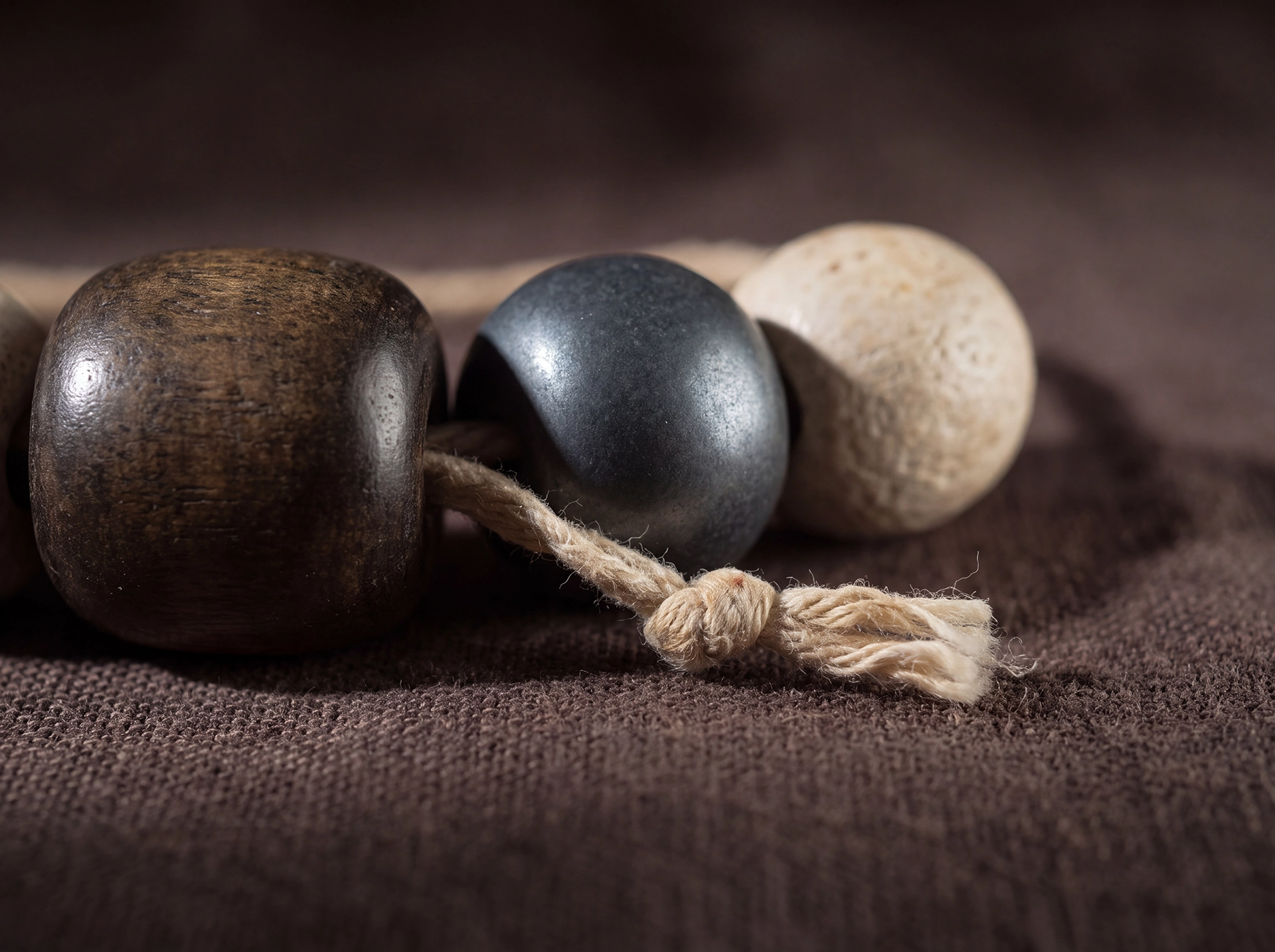
Material is a question of character rather than outcome. Stone, wood, and seed each behave differently: stone holds coolness and weight, wood warms quickly and darkens with handling, seed brings a lighter, more textured feel. Bodhi seed, commonly associated in Buddhist contexts with the tree under which the Buddha is said to have awakened, is a familiar choice for that reason. Sandalwood has a long history of use for its fine grain and its scent. None of these is more correct than another.
The framing that travels furthest in listings — a men's mala bracelet, for example — describes proportion and style rather than a different object. A wrist mala sold as a men's mala is simply strung longer or in heavier beads; the guru bead, the tassel, and the meanings around them are the same.
As a gift, a mala works well because it asks very little of the person receiving it. It can be worn without explanation, used without instruction, or kept on a desk as a small object of weight. If the recipient is beginning a practice, the most useful thing a giver can add is a short note about the guru bead: where to hold the mala, and which bead is not counted.
Mala Beads in Modern Ritual Life
The traditional layer comes first: a mala is a counted object for recitation, repetition, and attention, and that meaning does not change when the object leaves a formal practice setting.
Layered on top of that, and clearly contemporary, is the mala as a tactile reminder — something carried or worn as a point of return through an ordinary day. A bead moved between two meetings, a strand turned once before answering a message, a wrist mala felt against the arm on the way home. This is a modern reading, and it is offered as an addition rather than a replacement.
In the Kailash to Shambhala reading, the mala becomes an anchor and a companion: a strand resting on a desk, hanging near a meditation corner, sitting in a bag, or staying at the wrist. It does not need to be counted to be used. It needs only to be returned to.
Frequently Asked Questions
Do you have to be Buddhist to wear or use mala beads?
No. A mala can be worn or handled by anyone, and many people use one without belonging to any tradition. Its counted use is most closely associated with traditions that practice recitation, so someone outside those traditions may simply wear it, hold it, or use it to time a short pause. Both approaches are common.
Can mala beads be worn as everyday jewelry?
Yes. Many people wear a full-length mala or a wrist mala daily, as both a symbolic object and an everyday piece. Some practitioners keep a separate mala for formal practice and wear another; that is a personal choice rather than a rule.
How should a mala be cared for?
Keep it dry and wipe it with a soft cloth rather than soaking it, particularly if the beads are wood or seed. Store it hanging or in a small pouch, away from keys and other metal that can scratch the beads, and keep it out of prolonged direct sun. If the cord loosens over time, a mala is usually re-strung rather than replaced.
Conclusion
The meaning of a mala is carried by several parts at once — the counting beads, the guru bead, the tassel, and the count — and by the act of returning to it, bead after bead.
Asked plainly, a mala is a counting string used in recitation, understood across traditions as an object of repetition, attention, and steadiness. That meaning is practical and unhurried, and it survives the object being worn as jewelry, kept on a desk, or carried in a pocket.
A mala is finished the moment it is strung, and complete only after it has been used. Worn at the wrist or kept where stillness is practiced, it becomes what Kailash to Shambhala thinks of as an object of return — quiet, handled, and patient.