

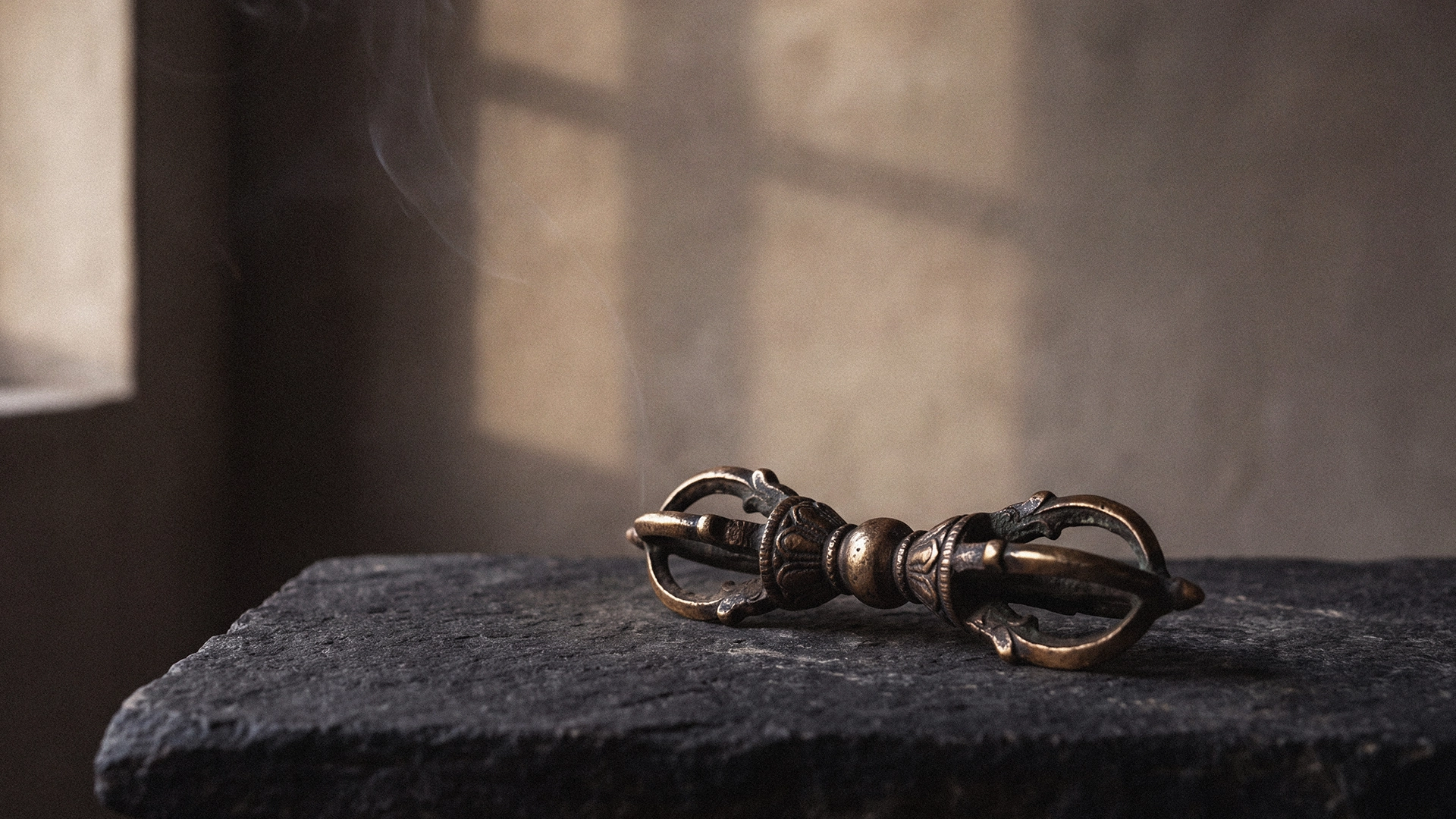
If you have searched for how to use a dorje, or for how to use a vajra, you may be expecting a short list of steps. The fuller answer is that the vajra — dorje in Tibetan — is a ritual implement with a defined place in Himalayan Buddhist practice, and its use belongs to that context rather than to casual handling. Kailash to Shambhala approaches objects like this from a cultural and symbolic perspective, and this guide follows the same approach.
This article explains what the object is, how it is understood within practice traditions, why most readers will not use it as a tool, and how to handle, display, and store it respectfully when it is kept as a meaningful object. It also adds an optional contemporary reading alongside the traditional one — never in place of it.
A short answer, first. A vajra (dorje) is a ritual implement used within Himalayan Buddhist practice. Its "use" belongs to practice and tradition, so most readers meet it as an object of meaning rather than an object they operate. The part most readers can genuinely act on is understanding it, handling it well, and storing it with care.
What Is a Vajra (Dorje)?
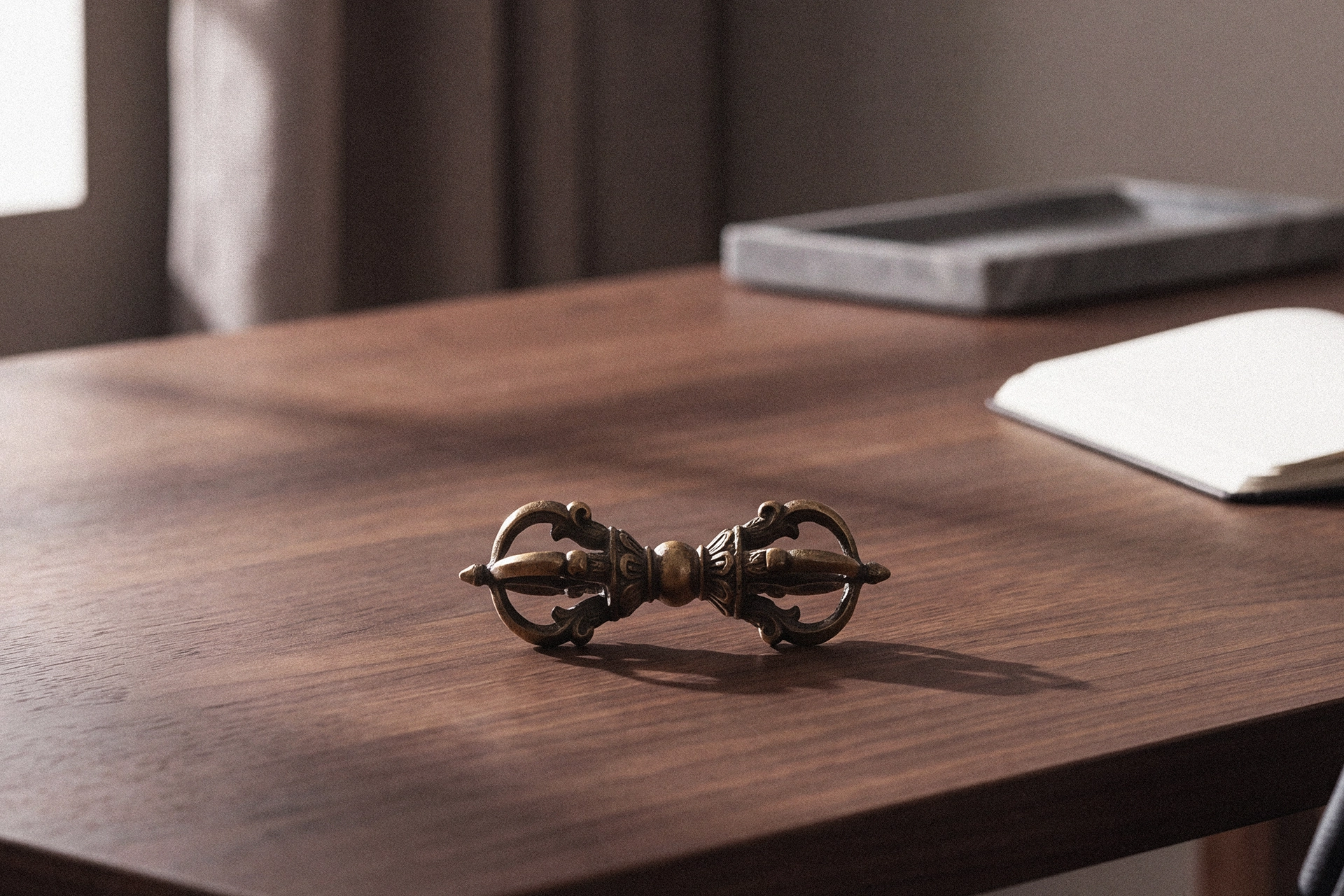
A vajra — known in Tibetan as a dorje — is a ritual implement used within Himalayan Buddhist practice contexts. It is not a general-purpose tool or a piece of everyday equipment. In physical form it is recognizable by a central grip flanked by symmetrical ends, often worked with prong-like elements, ornamental detail, and a carved or darkened shaft.
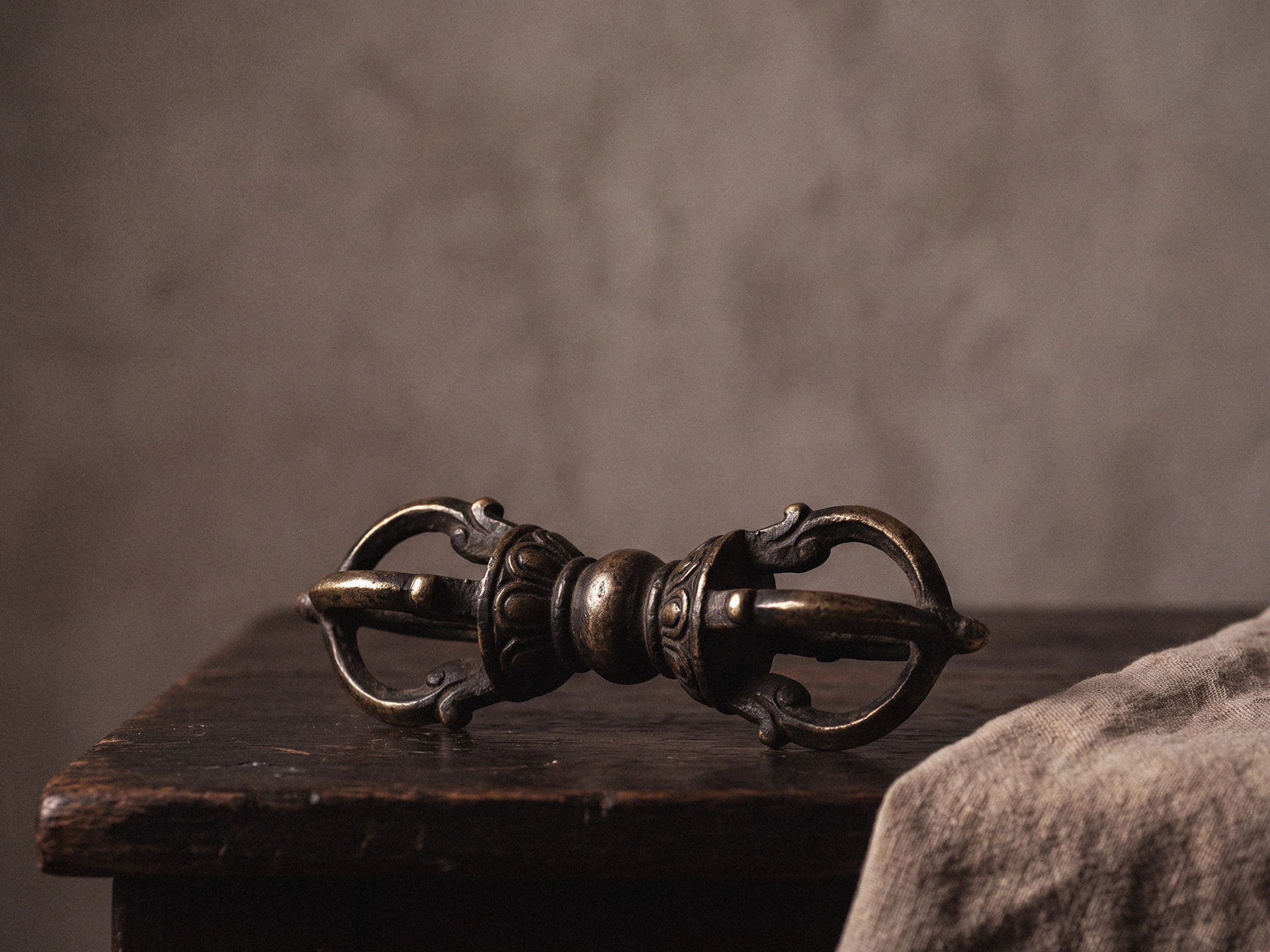
At a broad, attributed level, the vajra is associated in Buddhist symbolic contexts with clarity, indestructible awareness, and the settling of confusion. The Tibetan dorje carries the same symbolic weight. These are associations rather than operational descriptions — a vocabulary of meaning rather than a statement about what the object does.
Both names point to the same object. What changes between them is the language and the setting in which the name is used, which is where the next section begins.
A Modest Note on the Name
The conventional English name is vajra, a word that entered English from Sanskrit. The Tibetan name is dorje. In English writing about Himalayan and Tibetan-inspired objects, both appear, often within the same sentence.
The word vajra is broadly associated with ideas of indestructibility and, in older usage, with the image of a thunderbolt. That association is useful background, but it is a general gloss rather than a precise etymology, and it should not be treated as a strict one-to-one translation of the Tibetan. Different languages carry different shades of meaning, and the object itself remains the same regardless of which name is used.
Vajra or Dorje: What's the Difference?
Vajra and dorje are two names for the same object, used in different language contexts. Vajra comes from Sanskrit and is the form you will most often meet in English-language writing about Buddhism. Dorje is the Tibetan name, and it is the form most often heard in Tibetan and Himalayan settings.
In practice, the choice between them usually comes down to the language of the surrounding text rather than to a distinction in the object itself.
| Term | Language Context | Common Usage |
|---|---|---|
| Vajra | Sanskrit | The name most often used in English-language writing about Buddhism and in translated texts |
| Dorje | Tibetan | The name most often used in Tibetan and Himalayan contexts, including Tibetan-language practice settings |
Because both names appear in English, readers sometimes search for one and land on writing about the other. They are not two objects.
How a Vajra Is Understood in Ritual Context
Within Himalayan Buddhist practice, the vajra is a ritual implement with a defined place in tradition. It is understood and handled within living practice traditions, and the specifics of that use vary between lineages and are taught directly within them — in person, by a teacher, in the setting of practice.
That is why this article does not lay out hand positions, gesture sequences, or liturgical instructions. Those belong to the traditions that hold them, and they are learned in context rather than from a general guide. What can be described here is the object's role as a category: a ritual implement, used alongside other implements, and understood through a symbolic vocabulary that has been carried across generations.
It is worth keeping two things apart. One is the vajra's role as an object within a practice setting. The other is the symbolic weight the word carries in Buddhist thought more broadly. They are related, but they are not the same kind of statement, and neither replaces the other.
The Vajra and the Bell: How They're Traditionally Paired
The vajra is very often discussed alongside the bell in Himalayan Buddhist practice contexts. The two are commonly referenced as a pair — which is why so many readers search for them together — and each carries its own symbolic associations within a shared setting.
Many descriptions treat the pairing as complementary, with the two implements understood in relation to one another rather than in isolation. The exact roles each plays, and the way they are held and used together, belong to the lineage and setting in which they are practiced.
For readers asking how to use the vajra and bell together, the answer follows the same principle as before: the pair is used within lineage settings, and the details are transmitted there. What travels more easily is the pairing itself — the fact that these two forms are so often named in the same breath. That is also why the search for a dorje is so frequently a search for a bell as well.
What Is a Double Dorje?
A double dorje is a form in which the vajra's ends are present on both sides of the central grip. The name describes the form rather than a separate object with its own independent meaning system.
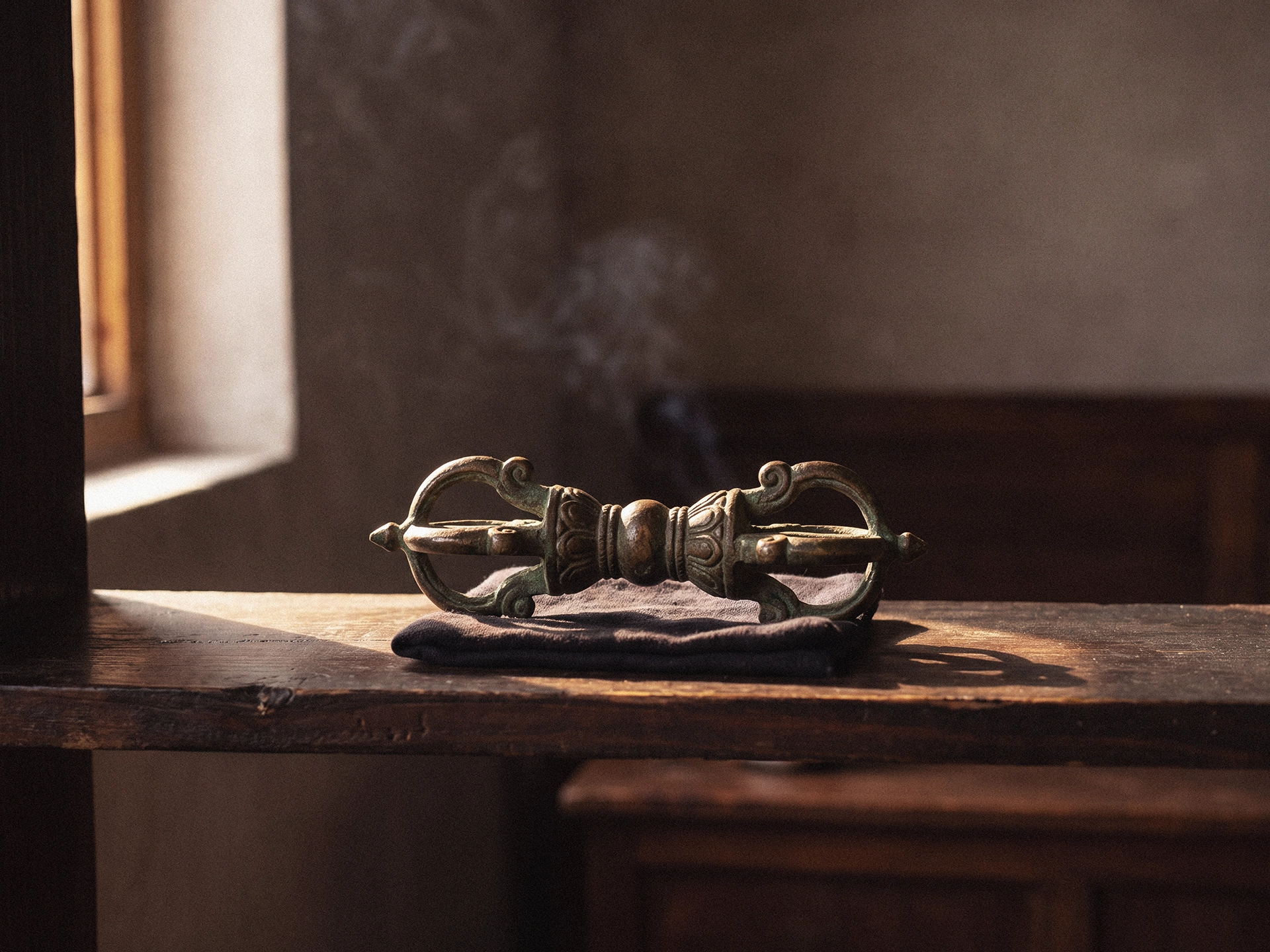
The form also appears frequently in design and decorative contexts — worked into metalwork, textiles, and small personal objects — where it circulates as a recognizable shape. Its presence in design does not create a new traditional meaning; it is the same symbol adapted to a different surface. And readers who look for how to use a double dorje can follow the same guidance as for any vajra form: handle it deliberately, keep it clean and dry, and give it a considered place.
Why Most Readers Won't "Use" a Vajra as a Tool
Lay readers generally do not use a vajra as an everyday tool. That is not a limitation of the object but a description of its context: it belongs to practice and tradition, and its use is embedded in settings that most people encounter as observers, students, or admirers rather than as practitioners.
There is nothing dismissive in saying so. Many objects that carry the deepest cultural weight are not, in the end, things we operate. A ritual implement sits closer to a piece of language than to a piece of equipment.
What a general reader can genuinely engage with is the object's meaning, its cultural context, its presence as something displayed and kept, and its care. That is the part of "how to use" that crosses cultures — and it is the part this guide can actually help with.
Handling and Storing a Vajra Respectfully
The most common English-language questions about the vajra concern handling and storage, and there is a short practical answer: hold it deliberately, keep it clean and dry, and place it with care rather than casually.
A few habits make that easier:
- Hold it with intention rather than in passing, especially if it is heavy or has fine detail.
- Keep it dry and away from damp, which is unkind to metal over time.
- Avoid leaving it loose in a drawer with keys, coins, or anything that can scratch a surface or catch on a prong.
- Give it a dedicated place — a shelf, a desk, or a quiet corner — rather than a spot where it will be knocked or buried.
- If the finish is dark, aged, or patinated, avoid abrasive polishes that strip the surface rather than clean it.
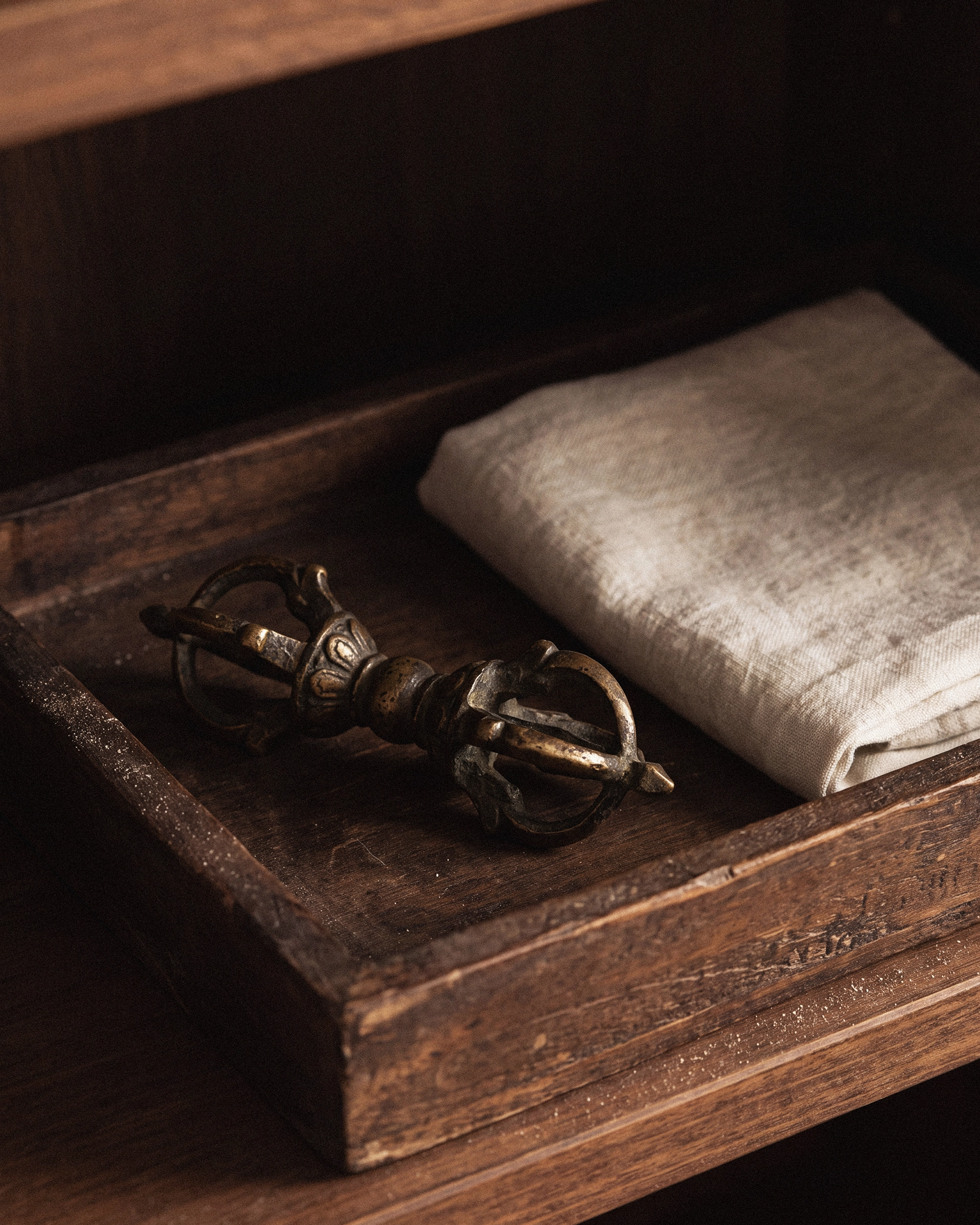
Anyone practicing within a specific tradition should take handling guidance from their teacher or lineage rather than from a general article, since the meaningful details of practice are transmitted in person.
A Vajra as a Symbol of Steadiness and Clarity
At the broad level the symbolism supports, the vajra is associated with clarity, indestructible awareness, and the settling of confusion. In Himalayan Buddhist symbolic contexts it points toward an awareness that holds steady rather than scattering — clarity as something maintained rather than something felt in passing.
For Kailash to Shambhala, that symbolism becomes something a modern reader can carry into ordinary life: a reading of the vajra as a quiet object of focus, boundary, and inner order. This is an additive layer, not a correction of the traditional one. The traditional meaning stands on its own, and the contemporary reading simply sits alongside it.
The vajra form also appears in modern objects — most often as a small pendant, a desk piece, or a shelf object rather than as a full-size ritual implement. A double dorje pendant or a vajra-form object for a desk is a way of keeping the symbol present in daily life without pretending to the ritual role of the implement itself. Placed on a desk, a shelf, or a quiet corner, such an object reads as a sculptural anchor. It does not ask to be operated. It asks to be seen, returned to, and kept.
Frequently Asked Questions
Is a vajra used as a weapon?
No. The word vajra is associated with a weapon in older, broader traditions, and the thunderbolt image belongs to that history, but the object itself is not used as a physical weapon. Its meaning as a symbol and its identity as a ritual object are separate from the weapon associations the word carries in older usage.
Can anyone use a vajra or dorje?
Its use is tied to practice and tradition rather than to open personal use. Most general readers relate to a vajra as an object of meaning and care — something to understand, display, and keep well — rather than as a tool they operate.
Conclusion
A vajra — dorje in Tibetan — is best understood as a ritual implement with a defined place in Himalayan Buddhist tradition, not as a general-purpose tool. That is the answer to the original question in its plainest form: what the object is used for belongs to practice, and the specifics of practice are taught within practice. Most readers will meet the object through its meaning, its form, and its care rather than through use.
At the center of that meaning is clarity — an awareness that holds steady rather than scatters. For Kailash to Shambhala, that is the part of the vajra that travels well into a quiet modern room: an object of return, kept in a place where steadiness is practiced.