

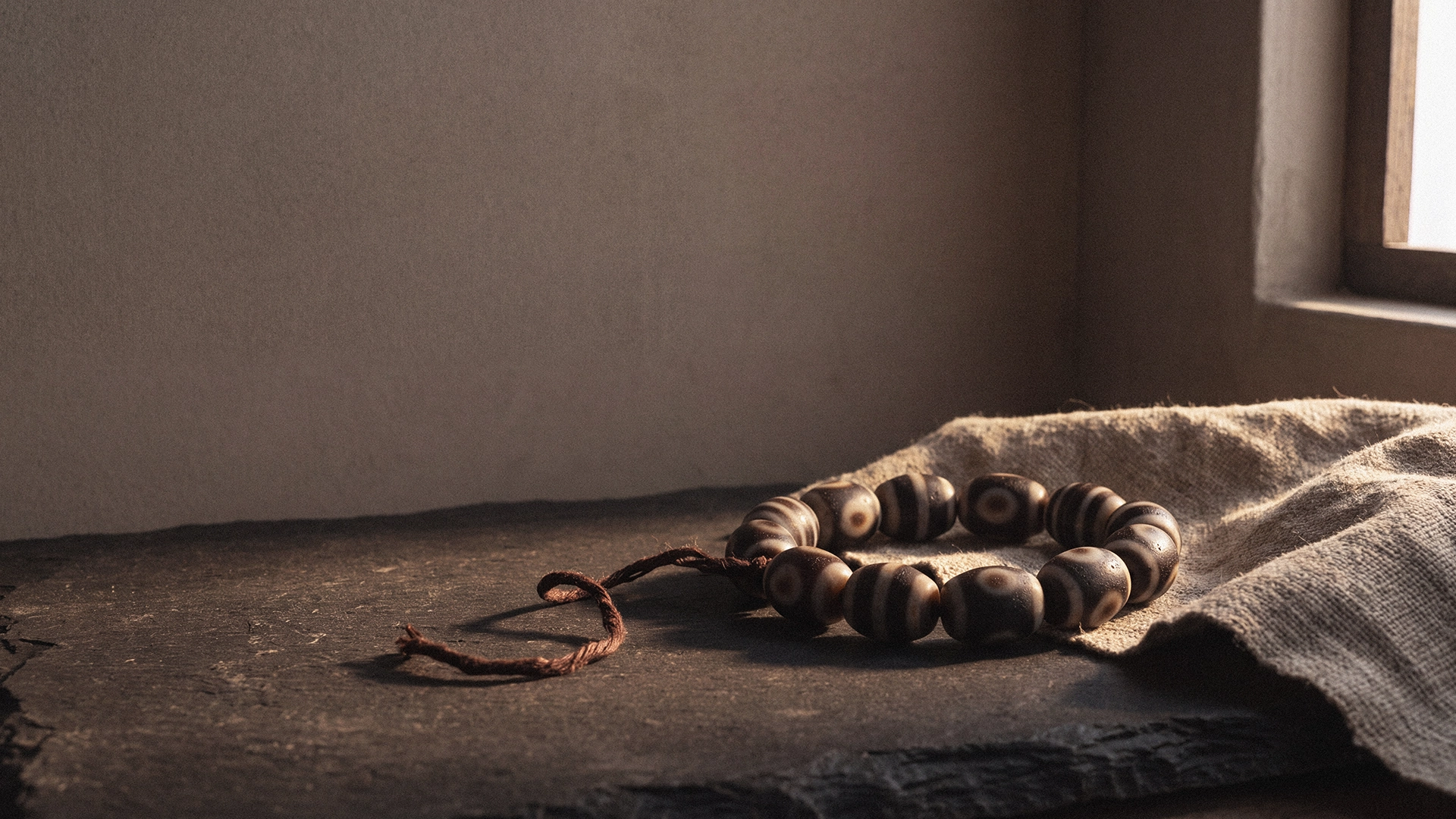
You have seen it written—dzi—on a product page, a museum label, or in a collector's forum. Perhaps you have wondered: how do you actually say it? And what does the word itself mean? At Kailash to Shambhala, where we work with Himalayan-inspired ritual objects, we often hear these questions. The answer is two-part: the word and the object it names. In English, the term is usually kept as-is rather than translated, and English speakers commonly approximate it with a "dz" sound followed by a long "ee." Spellings like dzi and gzi both circulate, a result of transliteration from Tibetan. And the word normally refers to a specific kind of patterned stone bead associated with Himalayan and Tibetan-influenced culture—not a general word for "bead."
Quick answer:
"Dzi" is most often pronounced "dzee" (like the ds in "roads" + "ee"). It is a borrowed name for a distinctive stone bead, often called a dzi bead, and its spelling varies because it comes from a Tibetan-language term rendered into English letters.
What Does "Dzi" Mean, and Where Does the Word Come From?
In everyday English usage, dzi functions as a name for a specific type of bead rather than a word with a settled English definition. The term reaches English mainly through transliteration of a Tibetan-language word. That is why it is usually retained rather than translated: like many object names that travel between languages, it is kept close to its original sound. Asking "what does dzi mean in Tibetan?" is a fair question, but a precise rendering is difficult to state confidently in English. It is best handled as a translation question rather than a dictionary definition. What we can say is that the word entered Western usage through Himalayan and Tibetan-influenced bead culture, and it names an object with its own cultural weight.
Name Versus Translation
Many object names travel between languages as sound rather than meaning. They are borrowed, not translated. This is why "what does dzi mean?" can be answered in more than one way. In English, the word simply points to the bead. In Tibetan-influenced contexts, it may carry associations that are not captured by a single English word. For the reader, the practical takeaway is that dzi is a name, and using it accurately means understanding what it refers to.
How Do You Pronounce "Dzi"?
The most common English approximation starts with a "dz" sound—like the ds in "roads" said as one unit—followed by a long "ee" sound. So: "dzee." There is no single enforced English pronunciation; usage among English-speaking collectors, sellers, and readers varies. A reasonable approximation is usually enough in conversation. The word feels unfamiliar to English speakers because the initial "dz" cluster does not begin many English words, and the spelling gives little guidance about the vowel. Many English speakers simply say "zee," which is a natural simplification rather than an error. Both are understood in context.
Common English Approximations
- Dzee: The closest common rendering of the original sound. This is the approximation we recommend for clarity.
- Zee: A simplified form many English speakers default to. It is widely understood and not considered incorrect in casual usage.
Saying It in a Sentence
In ordinary English speech, dzi sits before "bead" as an adjective-like modifier: "a dzi bead," "dzi beads." Because it is a borrowed name, it is normally not pluralized or inflected in English—you would not say "dzis." You may also hear it in phrases like "dzi bead bracelet," "dzi bead necklace," or "Tibetan dzi beads." These are the forms you will most often see in listings and articles.
Why the Spelling Varies: Dzi, Gzi, and Other Renderings
Dzi and gzi are two common English spellings of the same Tibetan-language term, not two different objects. Transliteration—writing a term from a non-Latin script in English letters—allows for more than one defensible spelling. Different publishers settle on different conventions. Romanization choices, how sounds are matched to letters, account for most of the variation you will see between listings, books, and forums. Consistency within a single source matters more than choosing a "correct" spelling, since the term has no single standardized English form.
| Spelling | How It Is Typically Read Aloud | Where It Is Most Often Encountered |
|---|---|---|
| dzi | "dzee" | General English usage, product listings, collector forums |
| gzi | "zee" or "dzee" | Scholarly works, some Tibetan cultural texts, older sources |
| dZi | "dzee" | Stylized brand names, some jewelry listings |
| zee | "zee" | Informal English simplification |
Note: These are transliteration variants, not separate objects. The spelling you choose is less important than using it consistently.
What "Dzi" Refers To in Himalayan-Inspired Bead Culture
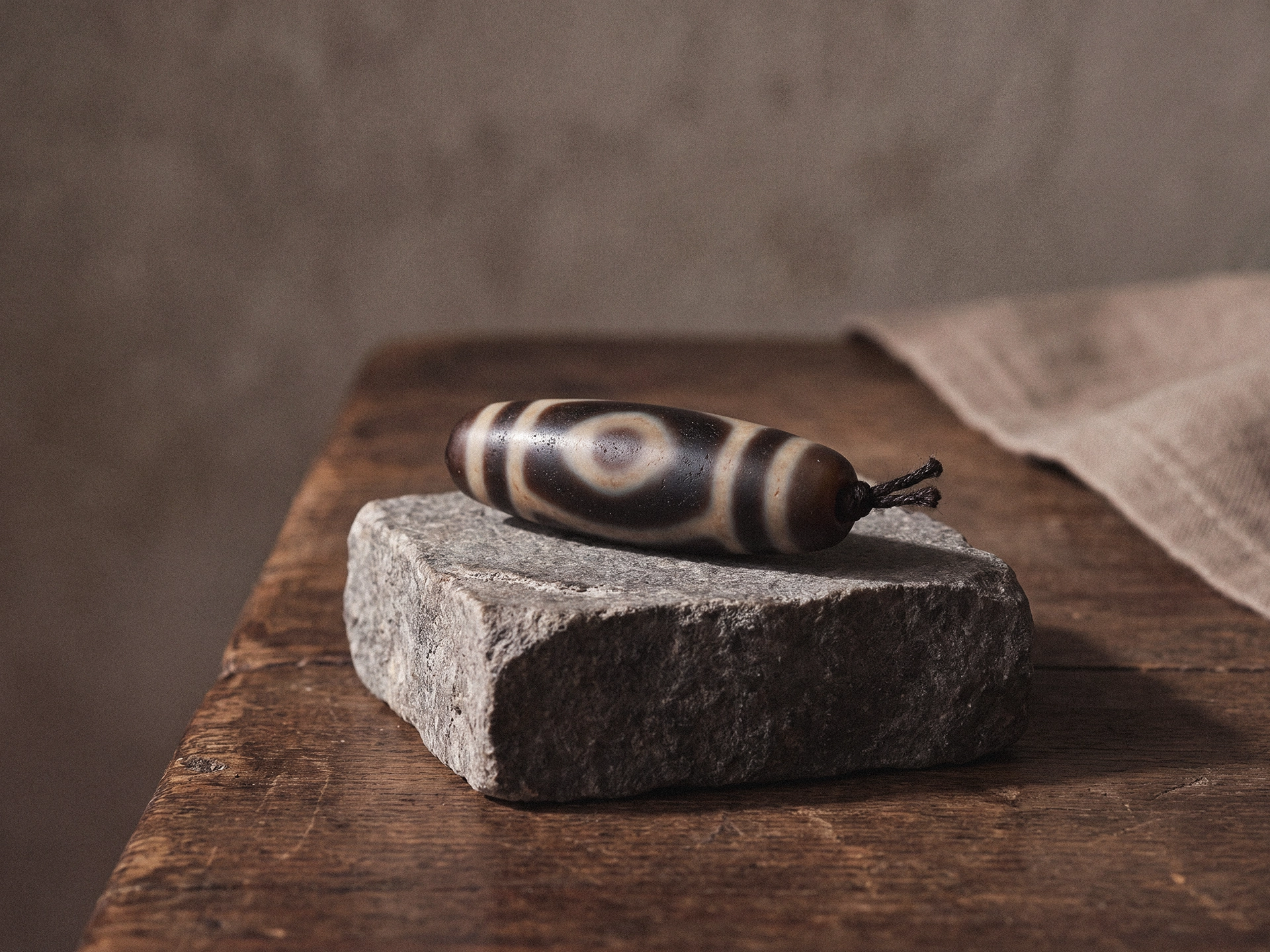
The term is used for a distinctive patterned bead associated with Himalayan and Tibetan-influenced bead culture. It is commonly described as a stone bead with surface patterns or "eyes"—a term that refers to the eye-like motifs often seen on these beads. Dzi beads are prized as collectibles and worn in various ways: as a dzi bead bracelet, a Tibetan dzi bead necklace, or simply as a single bead carried close. In Dutch, the term sometimes appears as "dzi kralen" (dzi beads), a reminder that the name refers to a specific object across languages.

What is a dzi bead? It is a patterned stone bead with cultural depth. These beads carry cultural and folk associations in the traditions where they appear. They are often associated with protection, continuity, and watchfulness—associations that belong to those traditions rather than being universal claims. In some contexts, dzi beads are also linked to ideas of lineage memory and personal anchoring. It is important to distinguish the word from the bead itself: this article is about the term, but the term points to a material object with its own history and significance.
A Note on Material and Form
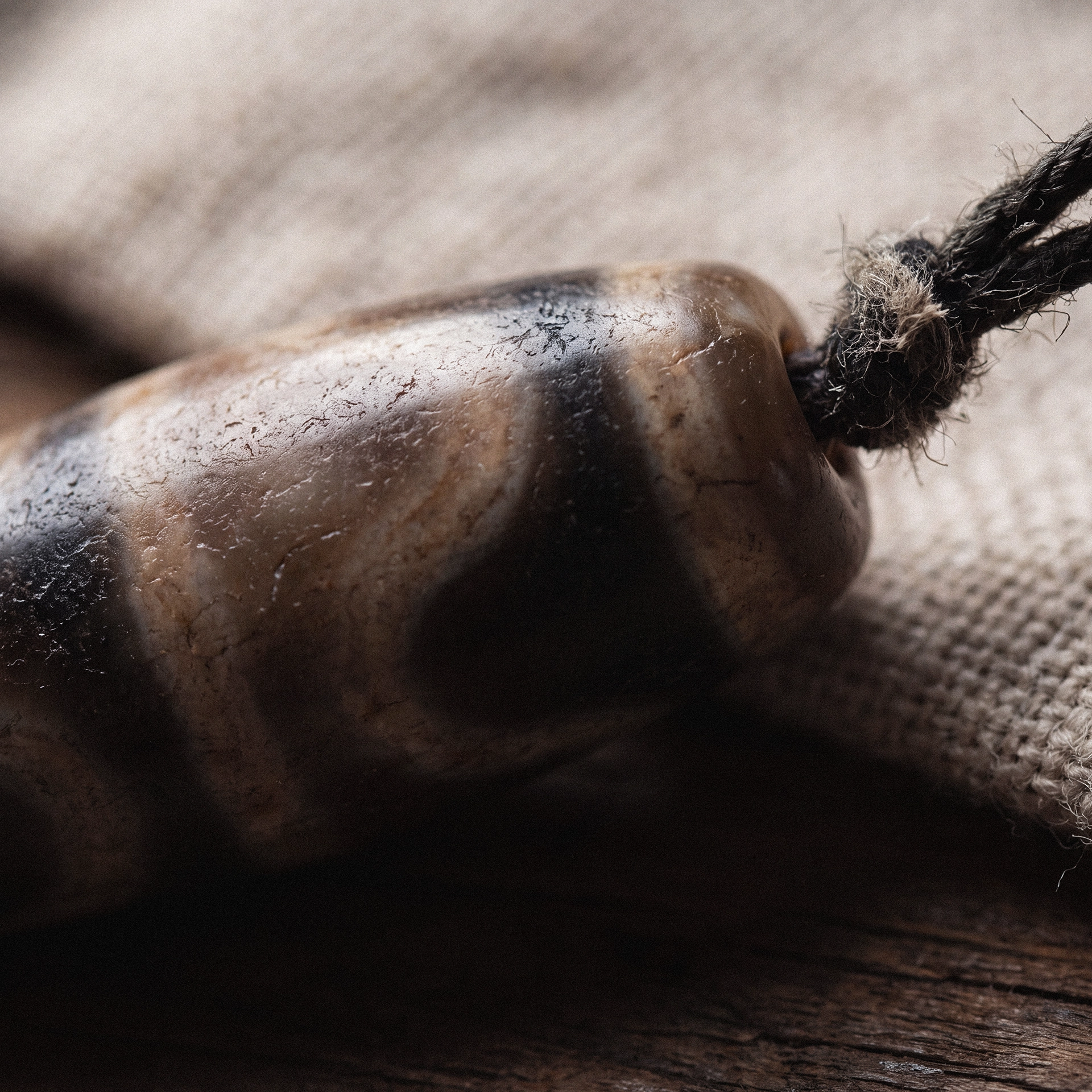
Agate dzi beads are common; agate is a material often used for these beads, prized for its hardness and ability to take a high polish. You may also encounter dzi stone beads in various shapes, though the classic form is a rounded bead with patterns. Whether as a Tibetan bead bracelet, a Tibetan dzi necklace, or loose dzi stone beads, the object remains the same: a patterned stone bead with cultural depth.
Common Confusions: The Word, the Bead, and Related Names
The most common confusion is mixing up the term dzi with similar-sounding or similarly spelled bead terms—and mixing up the word with the object. Dzi versus gzi is a spelling difference for the same term, not two separate bead types. Dzi is also a specific name, not a category. It is not a general word for "bead" or for strung prayer or decorative items. Because it is a borrowed name, it does not translate cleanly into an English noun, which is part of why it is often kept whole. When you see "dzi beads" or "Tibetan dzi beads," you are seeing the specific term applied to the specific object.
Writing and Saying "Dzi" in English: A Practical Note
For readers who need to write, search, or talk about the term accurately:
- Capitalization and styling: The word is normally written in lowercase in running text. It is often italicized on first use as a borrowed term, though neither is mandatory.
- Consistency: Pick one spelling for a given piece of writing—usually dzi—and use it throughout rather than switching between variants.
- Searching: Searching both dzi and gzi returns more results, since sources differ. This is a spelling issue, not a difference in subject.
- Common phrasings: You will most often see the word in phrases like "dzi bead," "dzi bead bracelet," "Tibetan dzi bead necklace," and "dzi eye beads." Recognizing these forms helps in listings and articles.
Naming and Meaning: A Contemporary Reading
A word that resists easy translation can itself be a small reminder that not everything meaningful resolves neatly into a familiar word. For Kailash to Shambhala, this is part of how we treat Himalayan-inspired objects: as things worth naming carefully and approaching slowly, rather than as fast-moving curiosities. The term dzi is a borrowed name, kept close to its original form. Using it carefully—whether you say "dzee" or "zee," whether you write dzi or gzi—is part of respecting what it refers to. This is a contemporary reading, offered alongside the cultural material, not in place of it.
Conclusion
The word dzi is a borrowed name, not a translated one. Its spelling and sound vary because of how transliteration works—dzi and gzi are two common English renderings of the same Tibetan-language term. The most common English approximation is "dzee," with "zee" as a widely understood simplification. Above all, the term names a specific Himalayan-inspired bead: a patterned stone bead with cultural associations that belong to the traditions where it appears. To use the word carefully is to acknowledge the object it names—and to approach that object with attention. At Kailash to Shambhala, we find that naming things well is a quiet practice in itself.