Vajra Dorje Meaning, Jewelry, and Ritual Placement
1. What does Vajra Dorje mean?
Vajra and Dorje refer to a recognizable double-ended symbolic form often associated with clarity, indestructible awareness, disciplined focus, symbolic protection, and the cutting through of confusion. In this collection, the meaning is translated as focus, boundary, stillness with structure, and inner order. It is not presented as a magical power object or a promise of guaranteed protection.
2. Are Vajra and Dorje the same symbol?
Vajra and Dorje are closely related names for the same symbolic form. Using both terms helps customers find the category whether they search for Vajra, Dorje, Tibetan Vajra, Buddhist Vajra, ritual thunderbolt, Dorje pendant, Vajra bracelet, Vajra altar decor, or Vajra ritual tool.
3. What is a Vajra ritual tool used for?
A Vajra ritual tool may be approached as a Tibetan-inspired symbolic object for a personal altar, meditation shelf, study room, or quiet ritual corner. In the KTS context, it functions as a sculptural reminder of clarity, disciplined attention, symbolic boundary, and inner order, not as a claim of ritual authority, monk blessing, or supernatural force.
4. What does a Dorje pendant symbolize?
A Dorje pendant brings the vajra form close to the body as a personal object of focus. Its meaning can be read through clarity, firm intention, quiet protection, and symbolic boundary. Worn at the neck, it becomes a small anchor for steadiness rather than a charm promising literal luck, healing, or magical power.
5. Why wear a Vajra bracelet?
A Vajra bracelet translates the symbol into a tactile daily object. Because the wrist moves through work, travel, gesture, and routine, the bracelet can serve as a quiet reminder of focus, boundary, and disciplined attention. Its value lies in symbolic presence and material contact, not in guaranteed outcomes.
6. What makes a Vajra ring meaningful?
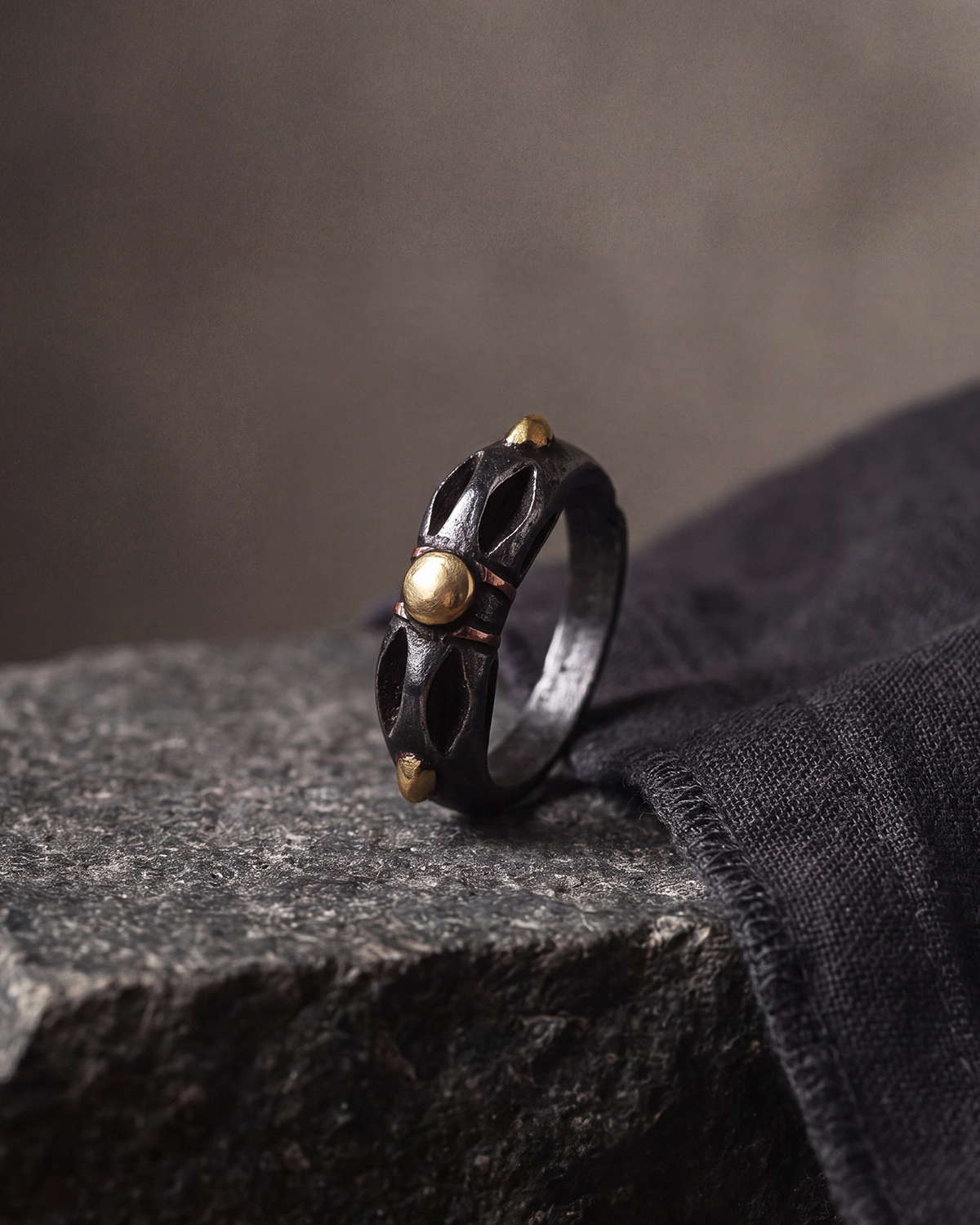
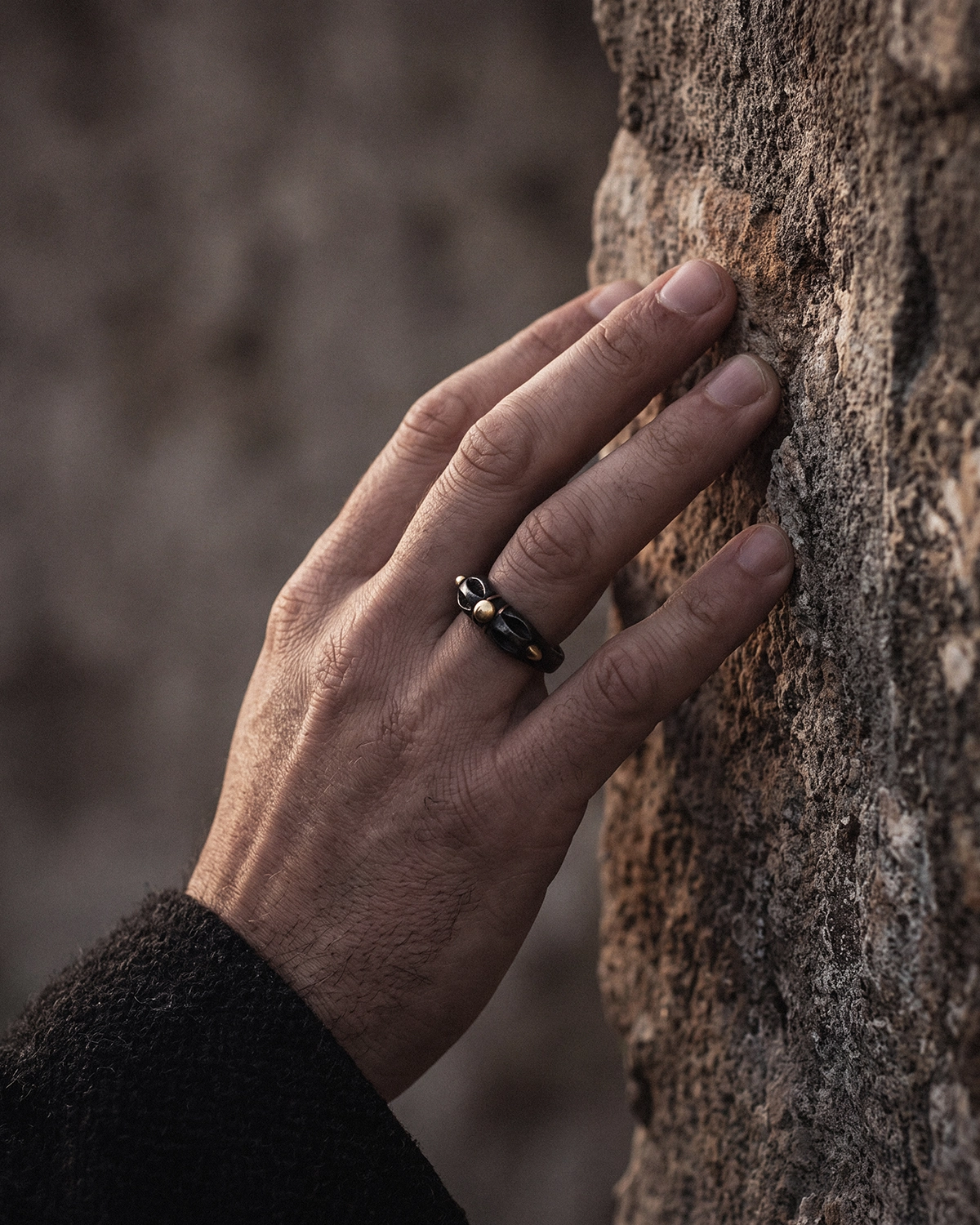
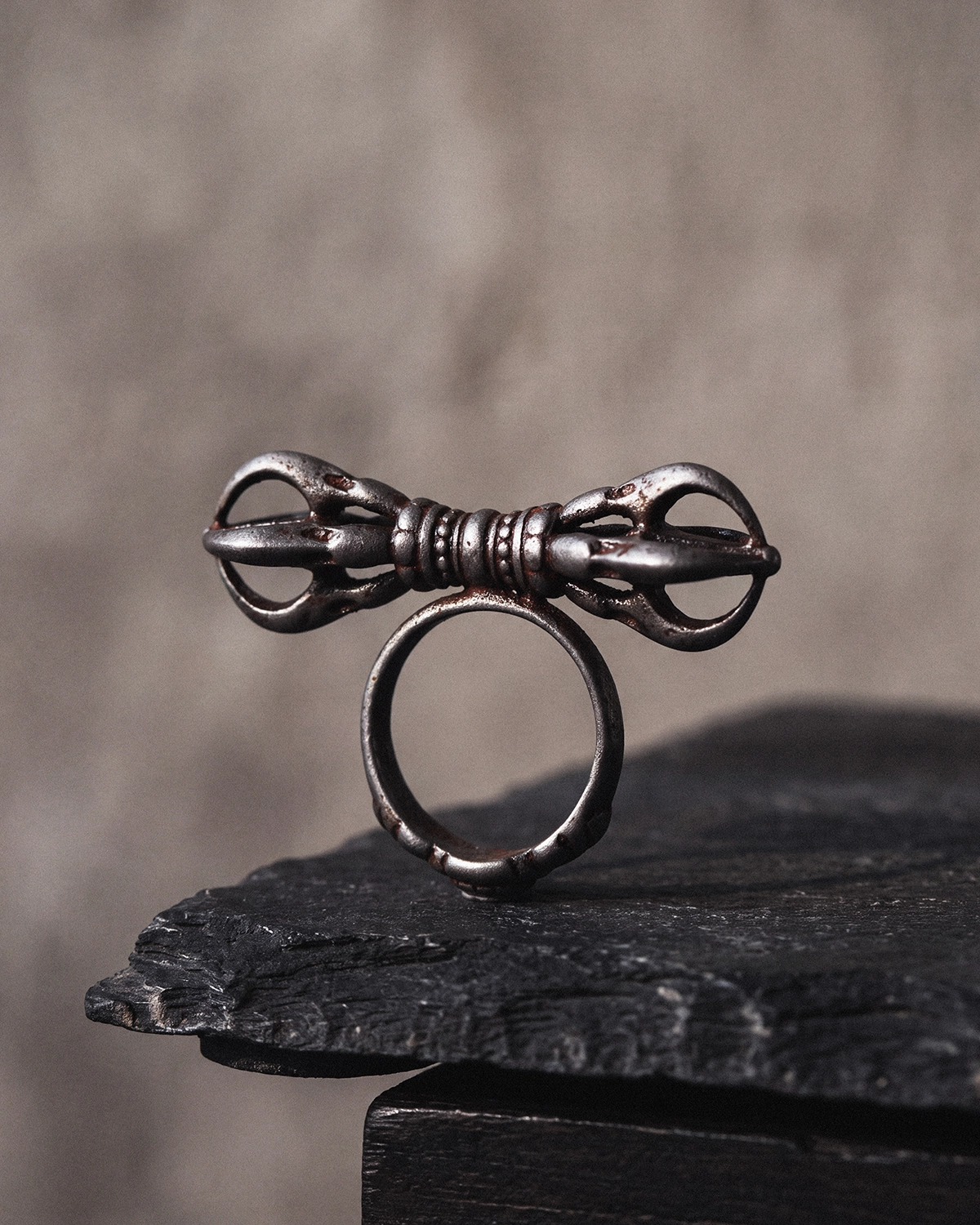
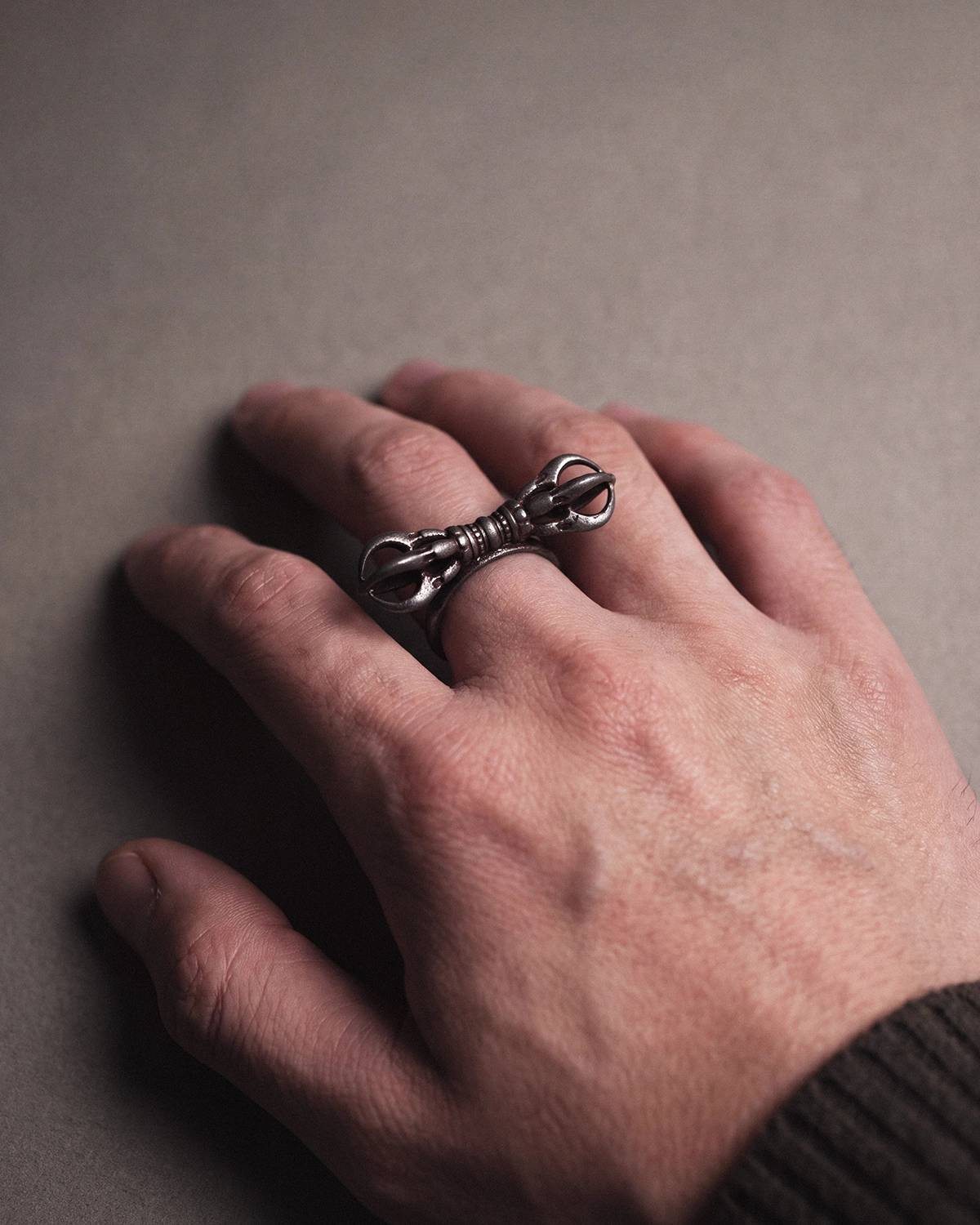
A Vajra ring gives the symbol a compact presence on the hand, where attention, choice, work, and touch meet. It can be understood as a quiet object of focus and inner order. The meaning should remain symbolic and grounded in form, material, and daily use rather than exaggerated spiritual claims.
7. Is a Vajra necklace a meaningful gift?
A Vajra necklace can be a meaningful gift for someone drawn to Buddhist-inspired symbolism, contemplative jewelry, quiet ritual objects, or strong sculptural forms. It is best framed as a gift of clarity, steadiness, boundary, and intention, not as a promise of luck, healing, wealth, or supernatural protection.
8. Where should Vajra altar decor be placed?
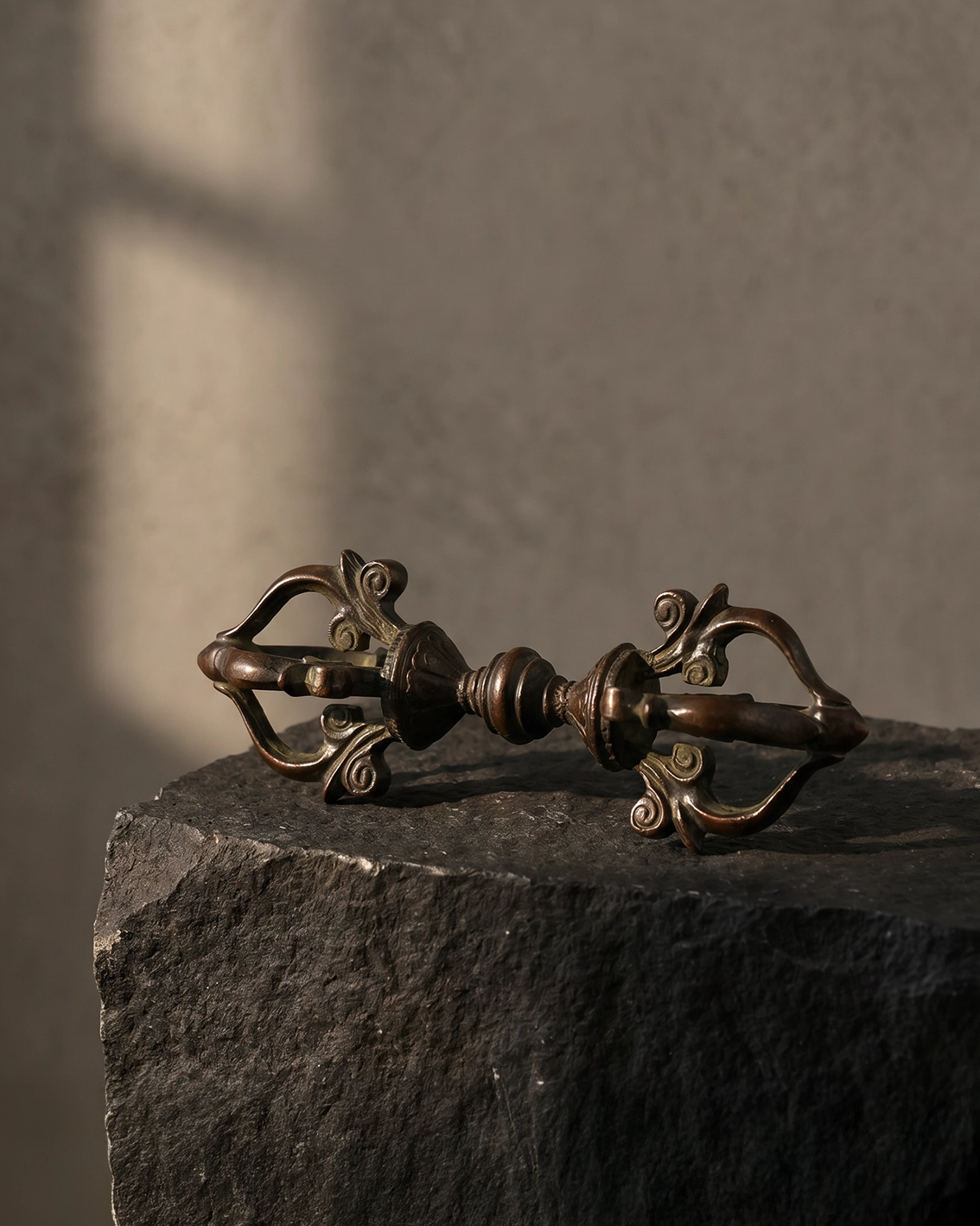
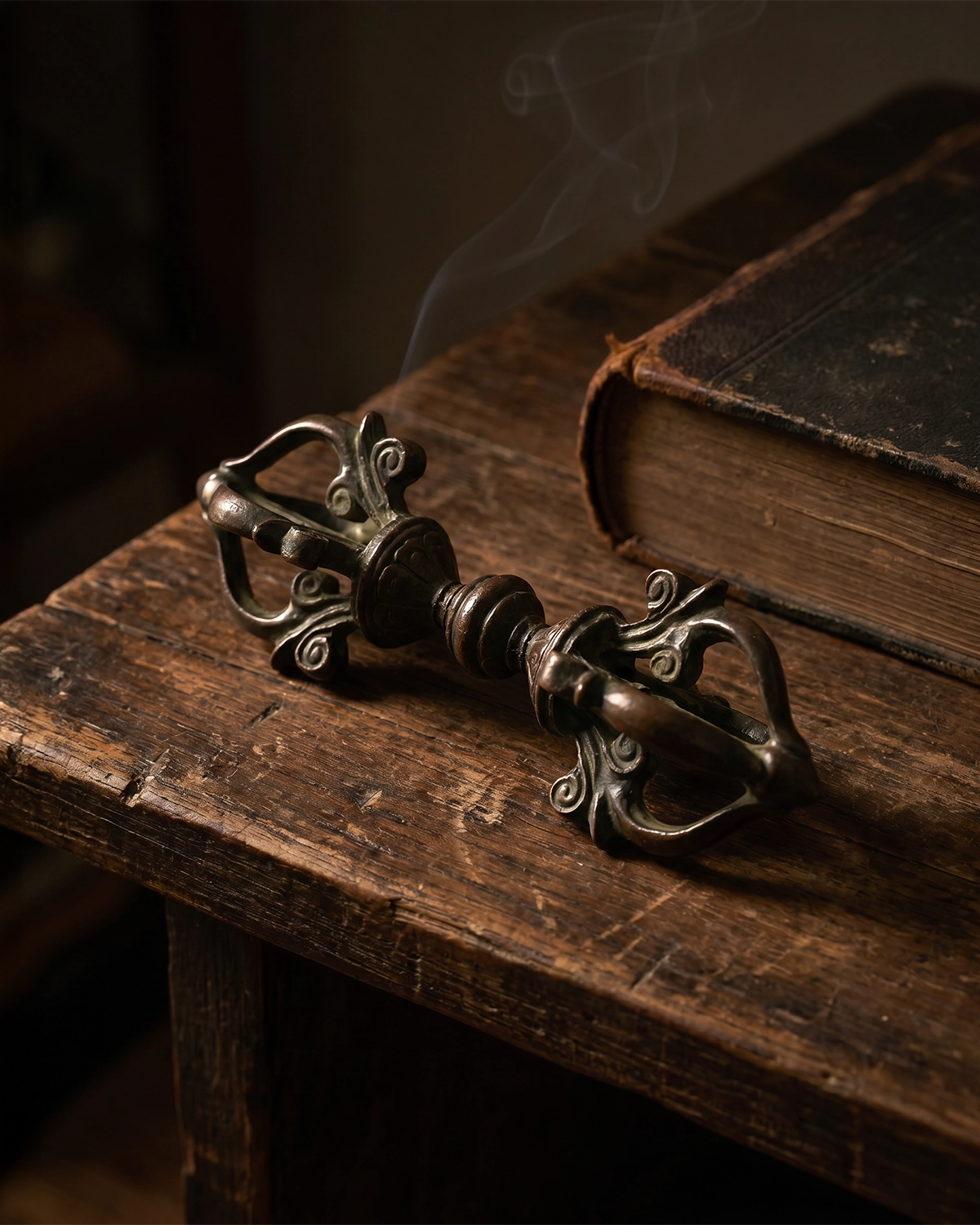
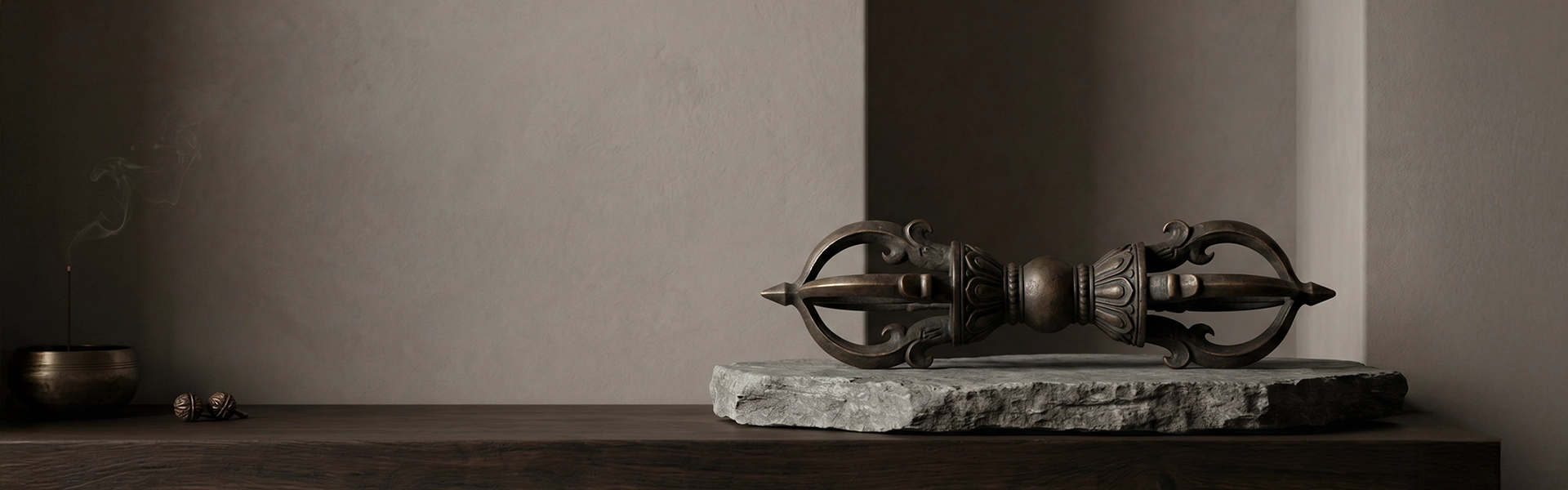
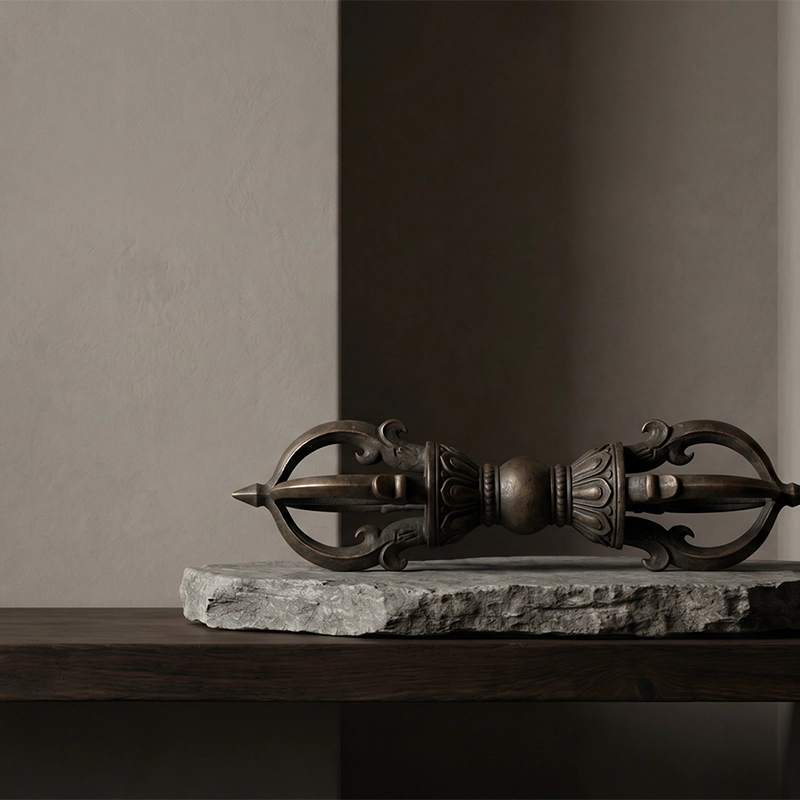
Vajra altar decor works best where the object can keep a clean silhouette and enough breathing room: a personal altar, meditation shelf, study room, dark wood desk, raw stone surface, or threshold space. Pair it with restrained materials such as aged metal, stone, shadow, and wood rather than crowded props, bright colors, or overdecorated shrine styling.
9. Is the Buddhist Vajra used here as a religious object?
This category treats the Buddhist Vajra with cultural respect while presenting the pieces for modern symbolic and aesthetic use. Unless a specific product provides verified details, KTS describes these items as Tibetan-inspired or Buddhist-inspired objects associated with clarity, focus, symbolic protection, and inner order, not as authorized religious implements.
10. How should a Tibetan Vajra be styled in a Western home?
A Tibetan-inspired Vajra is strongest in a restrained Western setting with clear structure and space around the object. Place it on a dark wood shelf, raw stone surface, quiet study desk, meditation shelf, or altar corner. Let controlled side light reveal the prong structure, central grip, carved shaft, oxidized recesses, and aged bronze or copper tone.
11. What should be avoided when displaying a Dorje ritual object?
Avoid styling the Dorje as a weapon, magic wand, glowing power object, monk-used relic, aggressive ritual tool, or fantasy prop. Also avoid making it look like a soft decorative bronze object, bright polished souvenir, Hindu shrine item, or cozy spa decor piece. The strongest KTS expression is severe, sculptural, clean, quiet, and materially defined.
12. What kinds of Vajra jewelry belong in this collection?
This collection may include Dorje pendants, Vajra necklaces, bracelets, rings, beaded forms, and other wearable objects that preserve the symbol’s structure, clarity, and visual weight. The jewelry should feel like a quiet object of focus and boundary, not a generic spiritual accessory or a decorative charm stripped of meaning.
13. How is a Vajra altar object different from Vajra jewelry?
A Vajra altar object belongs to a surface, shelf, desk, meditation corner, or ritual space, where its sculptural form can act as a visual anchor. Vajra jewelry keeps the symbol close to the body through a pendant, necklace, bracelet, or ring. Both can carry the same themes of clarity, boundary, and inner order, but they serve different daily contexts.
14. Why is Vajra sometimes called a ritual thunderbolt?
The phrase ritual thunderbolt is one English-facing way people search for the Vajra form. For KTS, this language is kept symbolic and restrained: it points toward clarity, firmness, disciplined focus, and the cutting through of confusion. It should not be treated as a literal weapon, magical force, or supernatural power object.